
OldChemE
-
Joined
-
Last visited
Posts posted by OldChemE
-
-
-
-
I think you need to put the risk in context to make a good judgement on it. For example, when I was still teaching I had roughly 200 students I saw regularly in the course of a day. 2% would be 4 students that I knew well. If we were talking 2% risk of a deadly consequence - absolutely unacceptable. But, a useful medicine with a 2% risk of children missing a few days of classes -- totally OK.
-
6 hours ago, CharonY said:
I get what you are saying, and it is a general issue in public health that folks tend to think in extremes (e.g. deaths) but forget about health burden, loss of quality of life, and associated cost and drain on the health care system. After all managing a a disease for decades is often more expensive than just dropping dead.
exactly!
-
On 7/19/2023 at 4:10 PM, CharonY said:
I am not sure why having a broad definition is an issue. In fact, it is rather necessary to assess health burden. I may be misunderstanding OP, but it sounds to me that it is potentially assumed that "chronic" is somewhat aligned with severity and should therefore be visible.
However in this context the issue with chronic diseases is that they require ongoing management, regardless of severity. A lot of folks have hypertension, for example. Often it is well managed. Similarly, you would not easily notice folks with osteoathritis or osteoporosis other in their most extreme forms. Likewise, depression is a chronic disease, which has spiked a fair bit during the pandemic.
And if you go down the list of common chronic diseases, it is rather easy to see how you would get to 40-60% of the population having at least one of the issues especially taking an aging (and/or overweight) population into account. It should also be noted that chronic disease information in various jurisdictions can vary or missing, so comparison between countries could be difficult. Some require multi-year treatment rather than 1yr to qualify, or could be based on self-reporting (as in some European databases).
That being said, diabetes is a very strong indicator with enormous health burden and we can see here that the UK has a surprisingly low prevalence (about 4%), whereas Canada, Germany USA and Mexico are way higher (7.6, 10.4, 10.8 and 13.5).
I believe the main issue with the broad definition is that it makes the problem more easily discounted or ignored ("What, 6 in 10?? politics!")
-
-
On 3/18/2023 at 3:06 AM, J.C.MacSwell said:
For an average individual the medical community seems to suggest a healthy resting systolic blood pressure of no more than 120 and diastolic blood pressure no more than 80 and a resting pulse pressure (the difference between systolic and diastolic)be no more than 40.
So given a slightly elevated resting systolic pressure of say 130, what would they like the lower number to look like? And why?
Recently,my wife was in the hospital recovering from an operation, and her blood pressure was very low-- so the doctor kept her in for observation. I noticed that the automatic blood pressure monitoring system showed not only the systolic and diastolic values, but a value labeled "mean." However, from the numbers it was clear that there was some sort of algorithm involved, as the third number was not a simple average. I asked the Nurse the meaning of the value and she told me it was a measure of "stable" blood flow in organs, and the goal was to stay above 60 to avoid medical problems for some organs. Totally new concept to me, but it suggests the two pressures (S and D) have a more fundamental relationship that is desirable.
-
-
4 hours ago, CharonY said:
That is true, and in many disciplines writing is a big part of it. One way you seem to suggest to do writing in class only? Because that is where we are headed for the moment.
Actually, until I retired from teaching a few years ago, writing in class was exactly what seemed to work best for teaching (at least for me). I was teaching Math. Instead of lecturing all during class and then having the math done as homework, I gave reading assignments for homework, then a quick review and had the students work their math assignments in class (on paper). This seemed to generate many discussions on best methods of solving problems, as well as ensuring the students had well-focused practice in solving problems. It also encouraged students to compare answers and self-correct, which is itself a good learning experience.
-
Certainly. Fairly simple organic chemistry. I've got an organic chemistry textbook on my bookshelf that covers how ("VOGEL") but I'm away from home at the moment so I cannot quote the method. The real question is why? Fermentation is simple, inexpensive and allows one to tailor the alcoholic beverage taste to suit the drinker's preferences.
-
-
You may not have fully understood one of the subtle points of Exchemist. He mentions compressible and incompressible fluids. With water, when the diaphragm moves it creates an instant large pressure change because the water cannot compress or expand. This is what gives good flow. With a gas, when the diaphragm moves the gas simply expands or contacts to fill the space, and you get a significantly smaller pressure change. This is the fundamental problem with trying to use a diaphragm pump to move gasses. It doesn't man it won't work, but the efficiency will be poor compared to pumping water.
-
-
At one time, back in the 60's, I learned to program computers in machine language, and I delighted in the fact that I could actually know, step by step, how the computer was performing its operations. Since then we have reached the stage in technology where the actual operations performed by the computer are complete buried in layers of code-- and the performance is vastly enhanced. Sure-- someone who knows a lot about the esoteric details might conclude that IEEE 754 was not the best approach. BUT its the one that things are built on. What you have in in the linked article is someone who sees the inefficiencies in the "wheel of choice" and wants to re-invent the wheel. The question is, can they demonstrate a financial and sociological benefit to the user of computation devices to make the change. "This is better" doesn't cut it.
-
-
1 hour ago, Ken Fabian said:
I think it is good to follow through with fusion and see how far it can be advanced but it isn't something we can rely on for clean energy solutions within the time scales we have. Given how extremely difficult it is to do at all doing it reliably at low cost looks a big leap; it may never become a serious energy source but may find applications all the same. Success with perovskite or other potentially very low cost solar would probably have a greater global impact in shorter time. And better batteries - which I think we can expect to see, given the levels of R&D currently in play. Putting some efforts into things that have hypothetical potential but cannot be counted on besides fusion look worthwhile too; optical rectenna/nantenna tech is one I think worth pushing harder on, for all that the yields achieved to date are just barely above proving they can work. A LOT less funding for that than fusion but I am not quite sure why fusion captures imagination but something that could generate energy from waste heat and downwelling InfraRed from the sky, day or night, does not.
This is the key point. Not all pursuit of technology is beneficial in the long run, but technology NOT pursued never produces benefits. So-- pursuit of success in fusion still seems like the right thing to do.
-
I know absolutely nothing on this topic, but an article recently caught my eye that puts this in doubt: https://www.science.org/content/article/fusion-power-may-run-fuel-even-gets-started
Last year, the Canadian tritium fueled an experiment at JET showing fusion research is approaching an important threshold: producing more energy than goes into the reactions. By getting to one-third of this breakeven point, JET offered reassurance that ITER, a similar reactor twice the size of JET under construction in France, will bust past breakeven when it begins deuterium and tritium (D-T) burns sometime next decade. “What we found matches predictions,” says Fernanda Rimini, JET’s plasma operations expert.
But that achievement could be a Pyrrhic victory, fusion scientists are realizing. ITER is expected to consume most of the world’s tritium, leaving little for reactors that come after.
Fusion advocates often boast that the fuel for their reactors will be cheap and plentiful. That is certainly true for deuterium: Roughly one in every 5000 hydrogen atoms in the oceans is deuterium, and it sells for about $13 per gram. But tritium, with a half-life of 12.3 years, exists naturally only in trace amounts in the upper atmosphere, the product of cosmic ray bombardment. Nuclear reactors also produce tiny amounts, but few harvest it.
-
To the first question: a qualified yes: anyone who gets old will develop something, inasmuch as there has to be some step between healthy and dead. But-- luck and healthy habits can help. I can speak to this a little because at about the age of 35 I determined that aspirin did not seem to have any side effects for me, and I was a runner (which puts a lot of load on knees), so from the age of 35 to 75 I experimented with taking two full size aspiring with food every day of my life. The purpose being to prevent inflammation and all the many health issues that inflammation has been linked to. At 75 I cut back somewhat in order to avoid gout (aspirin tends to promote gout). The experiment is still continuing as I am only 76 and in good health and have never experienced inflammatory issues such as arthritis. My cholesterol has begin to rise and I am taking meds for that. The only disease of old age I have encountered is prostate cancer, which killed both my father and grandfather-- so I had that removed the instant the PSA started rising. That was over 9 years ago and has not returned. Luck and lifestyle do help-- but sooner or later something will bring things to an end.
-
-
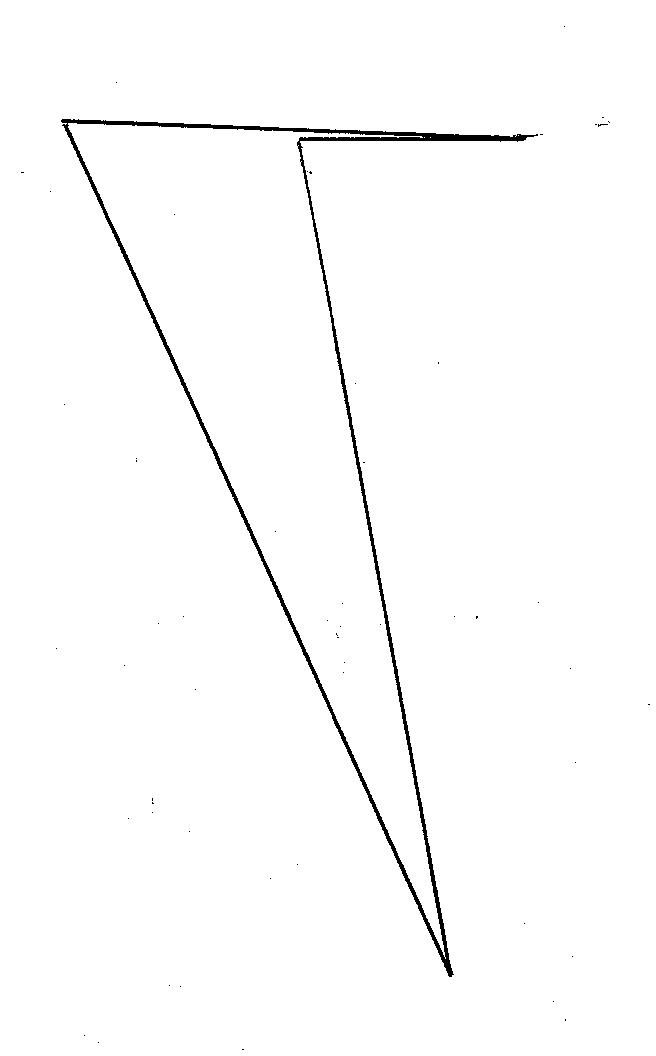
8 hours ago, studiot said:
A small point;
Technically, the figure offered by OldChemE is a re-entrant quadrangle and the one you offered is a crossed quadrangle.
Neither is a quadrilateral.
A quadrangle is not a quadrilateral unless it is also a polygon.
Your figure might actually be a pair of triangles with a common vertex.
I can't tell from the sketch.
The figure I suggested is both a quadrilateral and a polygon:
Concave quadrilaterals
In a concave quadrilateral, one interior angle is bigger than 180°, and one of the two diagonals lies outside the quadrilateral.
polygon/ (ˈpɒlɪˌɡɒn) /
nouna closed plane figure bounded by three or more straight sides that meet in pairs in the same number of vertices, and do not intersect other than at these vertices. -
-
The practicality and efficiency of online teaching also depends on the subject matter. Subjects that involve a lot of one-on-one interaction with students are more difficult to effectively teach online. For example, good math instruction frequently requires to teacher to wander the classroom and observe individual students as they work problems and also to discuss individual problems with the students. That's difficult in an online environment. Computer programs for teaching math are used by many school systems, and suffer from the same issues.
-
4 minutes ago, Peterkin said:
The systemic error - it seems to me - is the emphasis on elections, campaigning, propagandizing, canvassing, fund-raising, party-building, polling, strategizing, boozing and schmoozing, rather than the actual daily work of governance. The sojourn of any faction in power is too short and the process of getting there is too complicated, so they never have time to keep their eyes on the five dozen actual balls in play at any given moment, because they're already looking toward how to win the next scrum, the next challenge to their power, the next game. They have very time - and, let's face it, with all the power-struggles, back-stabbing, backstage dealing and face-saving that saps their political stamina - very little ability, to do their actual job.
Agree! One of the arguments in favor of term limits was that it was supposed to help with this, since a person in their final term has no need to prepare for re-election. Unfortunately, a good friend of mine who is a California legislator has assured me that the problem with term limits (in this case two 6 year terms) is that "six years just isn't long enough to get to know your fellow legislators and get anything done." How many of us who have jobs outside politics have an employer willing to let us take 6 years to begin to be effective in our jobs?
-
Edited by OldChemE
12 hours ago, iNow said:Unsure why you don’t feel that’s very specifically an economics and politics problem.
I’m not saying we can avoid unpredictable disasters, more that we can stop making the problems worse amd update building codes to support same purpose / fortify against other coming storms (much like California building codes now have requirements to protect homes against wildfires.
I’d focus more on desalination, storage, amd transportation of sea water as Israel has been doing for decades. The politics and unwillingness to invest, however, seem to be preventing this.
I see your point here. The reason I don't see it specifically as an economics and politics problem is because, even when the political and economical will is there to get things done, the deciding of what to do is still dependent on predicting what will work. Storage to be sure is important-- but we have water storage all over the west that is proving inadequate (Powell, Mead, San Luis Reservoir, Shasta and Oroville in California, Rye Patch in northern Nevada-- all getting rather dry). Thinking more about it, however, I do see that if voters wanted to spend the money and politicians listened, we could do many things, and be successful, even if some 'solutions' turned out to be less effective than others.
Just a “funny” story about my experience in the hospital
in Medical Science
Personally, I am ambivalent on the benefits of government involvement in health care or insurance. For over 30 years I worked for a very large corporation that elected to save money on health insurance by being self-insured. They took a reasonable payment from my pay each month (slightly lower than typical premiums) and covered everything. The beauty of that was that their profit motive required that they keep their employees productive. They were very generous about health coverage simply because they wanted their employees at work, not on sick leave (they also went big on health maintenance with gyms located in their facilities so you could work out at lunch if you wanted, etc). They also covered 'borderline' treatments, as long as it helped get the employee back to work (such as weight loss programs or surgeries). Unfortunately, the requirements associated with the new insurance market under Obamacare forced them to stop self-insurance. So-- in my case increased government involvement hurt. My old employer still helps by paying a portion of my annual premiums, but now I too am subject to the profit motive of private insurance.