
Frank
-
Joined
-
Last visited
Posts posted by Frank
-
-
Hydrogen powered, fuel cell electric aircraft company: Electric Air Taxi – HY4: http://hy4.org/sample-page
-
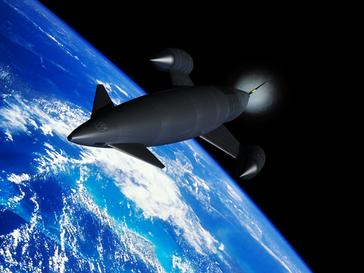
Thanks! For short hops flights, maybe consider compressed hydrogen instead, still higher volumetric energy density than Li-ion batteries and much lighter. Then there's Skylon for LH2 powered spaceflight - Skylon (spacecraft) - Wikipedia: https://en.wikipedia.org/wiki/Skylon_(spacecraft) Hydrogen Turbojet engines are being developed.
-
-
-
Edited by Frank
added linkPerhaps anhydrous ammonia makes more sense than aqueous. It can be dissociated in the regenerator using a nickel catalyst at a temperature of 920 C : 2 NH3
 N2 + 3 H2 then the Nitrogen and Hydrogen can be heated to high ejection speeds.
https://www.crystec.com/kllhyame.htm
-
On 7/20/2013 at 10:23 PM, Enthalpy said:
Hydrogen is the propellant that improves the exhaust speed over chemical reactions, but the Solar thermal engine accepts other propellants. Water at 2400K can give some 3000-4000m/s ejection speed, depending on the dissociation allowed by the chamber pressure - and if available in space, it enables big scenarios where the in-situ propellant needs no lengthy preparation.
Corrosion is a serious worry, hence the 2400K. If metals don't survive hot vapour, ceramics may: MgO and ZrO2, with 100K less? Tantalum hafnium carbide?If water can be used as a propellant, can aqueous ammonia work as well? How would dissociation due to ionization (NH4OH) affect Isp? Would the increase in hydrogen increase exit velocity and Isp?
One advantage is a lowered freezing point. Plus many of the advantages of water - smaller tanks, ISRU, non-cryogenic...
-
I found it encouraging that money was spent on STP and that 1200s Isp is thought to be achievable based on prototype results (even with their design). I'm still unsure how the ruminator works, but it sure would be neat to get a (small?) grant to build a one and test it at that facility. Most of the infrastructure is already in place!
Most high efficiency CPV works on multiple wavelengths, but light generally isn't selectively filtered and heat IS an issue. It's surprising that there is a way around that but it isn't being used (that I know of). I must admit that I don't understand how the selective wavelength filter works either.
-
Here are a couple of link to STP that might be of interest:
https://ntrs.nasa.gov/archive/nasa/casi.ntrs.nasa.gov/20160003173.pdf
https://ntrs.nasa.gov/archive/nasa/casi.ntrs.nasa.gov/20050203997.pdf
"Reduce tank volume with increased STP specific impulse approaching 1200 seconds
- Higher temperatures above 3000K increase Isp
- At higher temperatures above 3000K and low pressures, hydrogen starts dissociating and lowers the average molecular weight, which also increases Isp"
I guess dissociation of hydrogen will allow more Isp for a given temperature (which is limited by material properties), at the expense of efficiency, requiring more energy input.
-
I haven't looked closely at the numbers, but 7x more efficient seems optimistic to me. Here on Earth, it's VERY difficult to make a case for solar thermal based on cost, even where thermal should obviously be better. When it comes to mass as the currency, I don't know yet.
The working example of a concentrating solar collector I found is SCARLET https://pdssbn.astro.umd.edu/holdings/ds1-c-micas-3-rdr-visccd-borrelly-v1.0/document/doc_Apr04/int_reports/Scarlet_Integrated_Report.pdf
It's a fresnel concentrator and thermal management is on page 7 of the report. In 1998, 20 years ago, they managed 45W/kg for the array and DS1 with its ion engine worked.
Using a 4 m diameter dish and concentrating on a PV module will generate some heat. Quite a bit of it, because up to 60% of the energy will dissipate in heat if 40% efficient.
-
If we get 40% conversion efficiency from a concentrating solar array, is pumping this energy into an ion engine more efficient when its high Isp is considered?
All this technology is also known and working so the risk of development isn't there (or as high). Also, electricity is a generally useful form of energy (compared to heat) and may have use along the coast phase or even when parked waiting for the next mission.
I believe there is some cooling needed for those concentrating collectors, but no mirrors needed, which may end up adding to the mass of the array in the balance - hard to tell.
Quick Electric Machines
in Engineering
Since planetary gears are used in turboprop engines and/or turbofan engines, I think yes.
Also, I've noticed a sort of upper limit to existing permanent magnet motors of ~400 Hz or so, is there an induction resonance or high power electronic switching limit, or in other words, what limits the top frequency of electric motors?