swansont
Moderators
-
Joined
-
Last visited
Everything posted by swansont
-
 Still needs to be quantified, though, since most is not all, so the question is how much radiation is involved?
 -
It’s one thing for the government to monitor specific areas (public areas), and at least in the US you need a warrant to get tracking info from a cell phone. If it was discovered that this was happening without one, there would likely be an uproar.
-
It’s the scale of the approximation that’s relevant. Clocks today can measure and disseminate at around the tens of picoseconds level. One always tends to lead the other, from a technology standpoint - making a really precise measurement doesn’t mean a lot if you can’t tell anyone about it, i.e. the dissemination adds a significant amount of error to it (e.g. telling time to a nanosecond but your communication method is limited to a microsecond) - so there tends to be a focus on the lagging technology. During the latter half of my time at USNO there was a push to develop high-precision transfer over fiber-optic networks by labs around the world, to keep up with advances in the clocks. Prior to that it was improving satellite transfer methods using GPS signals. Time intervals/differences, if they are short enough, can be measured to even higher precision (clock vs stopwatch) It’s true. Interesting to some, sure. To those in timing/metrology, it’s more obvious. That’s a scale, though, and not a measurement. You would do a measurement with a thermometer or some other device, and that device would never be exact, nor could you be sure the value you measure is correct without calibration, which is a comparison to a standard. Yes. That’s a special category, and while you can have counting errors, you’re not really comparing it to anything.
-
Relative. All clock measurements are as compared to another clock. As an example, a pendulum clock ticks at some rate, but the length of the arm can vary (on purpose, or owing to e.g. temperature changes) so the only way to tell is by comparing to another clock, preferably with different/smaller sources of error. There’s no absolute measurement, no “truth” that we compare it to, no perfect clock. There’s a standard, but all measurements have errors. So nobody really knows what time it is (but some care); the time is what we decide it is - by agreement, these days. Same thing applies to length - you can’t use a ruler to tell if that ruler has expanded or contracted - or any quantity we measure
-
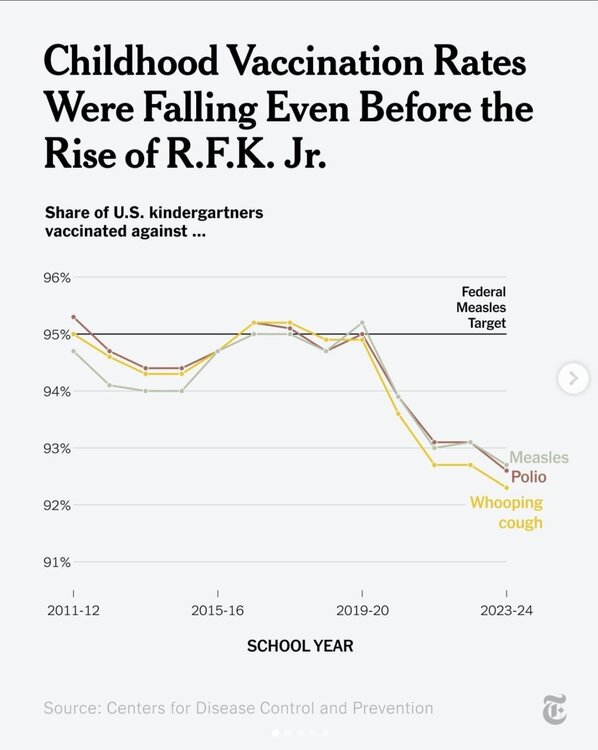
LEO especially has atmospheric drag, and there are effects from radiation pressure and gravitational anomalies. All can cause orbits to decay. I don’t have much issue with the items on the list, it’s the notion of unpopularity and that it happened just this year. What fraction of the population has to disagree for something to be deemed unpopular? For most (perhaps all) of these the opposition is comprised of a fairly small minority, and have been opposed far longer than this past year. Vaccination rates in the US, for example, have been dropping before this year, but 90% still probably qualifies as popular. The problem is that in needs to be even higher. https://www.instagram.com/p/DExj2EZRaOw/
-
There might be pushback against cars actually recording 360 degrees of their surroundings, by our techbro wanna-be overlords.
-
Moderator NoteNumerology is pseudoscience and preaching is not permitted here
-
Moderator NoteWe’re not here to do your homework for you. You need to show what you’ve done to try and answer the question
-
Moderator NoteWe’re not here to do your homework for you. You need to show what you’ve done to try and answer the question.
-
Yes, I think it’s quite obvious that you’ve misunderstood. I can’t fathom, for example, that one would think the existence of a tool is contrary to “doing something” for people. Why use a tool if it does nothing? Or that technology, enabled by science, is contrary. Or the notion that having the option to choose to adopt technology could be contrary. The underlying issue of the OP is one of the ability to solve problems vs the will to solve problems. Science can enhance our ability, but it’s moot if we don’t have the will, and the will (or lack thereof) has nothing to do with science’s “reach” Similar to the idiom “You can lead a horse to water, but you can't make it drink” There is no such field of study as natural science. As you say here, it is a group of sciences, a branch. The fields of study include physics, chemistry, biology and geology. One does not need to tack “science” onto these.
-
Not sure how this matters. Plates are on the front and/or back of cars, so the cameras tasked with this effort are pointed to mostly align with the direction of motion, not perpendicular to it. The pictures from the toll cameras I got last year were quite clear, and that was at ~100 km/hr. Getting a meter closer to the camera did not cause much blurring.
-
I would consider the irony of someone in one country having a discussion with people in other countries using multiple technologies derived from science arguing that science has done nothing for the people. An assertion this obtuse is farcical. It’s a subset of social science and brings to mind the adage that any discipline that has to declare that it is science, is not science.
-
Moderator NoteThis is too hand-wavy to meet the requirements of speculations, and if all you’ve got is repeating the same vague claims there’s no point in continuing. Closed.
-
Moderator NoteWe’re done discussing this with you.
-
aranbadan banned as a sockpuppet of gamer87, mariob87, carlosfan87, Hans87, jonas778 and maybe more
-
There was an inquiry about why this was closed. We’re a science forum, and you need to post science. For physics, this means equations describing the phenomenon, which permits people to see if it’s supported by evidence. It’s not a WAG that you just assert multiple times.
-
We’re currently in the range where quantum limits come into play, but there are tricks to try and improve precision. One limit from the HUP is the fact that the lifetime of atomic (or nuclear) states correlates with the transition width, i.e. the energy level has a fuzziness to it. Narrower levels have longer lifetimes, so it’s harder to cause the transition, which affects signal/noise. A lot of the practical effects on the fountain clocks were at the part in 10^17 level, which was O.K. because the measurement itself started at a few parts in 10^-13, and it took more than a year to get down to 10^-16. (white noise reduces with the square root of the number of measurements) Optical clocks start at a better short-term precision, and have to work hard to get their error contributions small enough to get their part in 10^18 (or better) results. As far as quantum limits go, there are tricks using “squeezed” states - you let one error that you don’t care about be big, so you can make (“squeeze”) the conjugate variable’s error smaller JILA and NIST have been exploiting entanglement https://jila-pfc.colorado.edu/news-events/articles/entangled-time-pushing-atomic-clocks-beyond-standard-quantum-limit “Each atom behaves independently, and their random quantum behavior adds noise to the measurement. This randomness is what defines the Standard Quantum Limit. It’s like trying to hear a single beat in a noisy crowd. To reduce this noise, scientists often increase the number of atoms. The more atoms you measure, the better your estimate—kind of like averaging more coin flips to get closer to 50/50. But packing too many atoms together causes them to interact in ways that shift the clock frequency, introducing new errors. So instead of adding more atoms, the JILA team tried something different: they made the atoms entangled. Entanglement is a quantum connection between particles. When atoms are entangled, their random quantum behavior becomes linked—even if they’re not touching. In this experiment, the researchers used entanglement to make the atoms behave more like a team, reducing the noise in their collective signal. This approach allows the clock to beat the SQL, achieving better precision without needing more atoms”
-
To add to this - science can inform us in many ways, but can’t compel people to act. We see this currently in the US, where science is being ignored because it conflicts with personal and political agendas. Science does not have agency by itself. Its influence can be broad or narrow, but that’s constrained by the collective will of people.
-
Moderator NoteI don’t see a model here. No predictions, no evidence, no avenue for falsifiability. i.e. the things we require for discussion Just AI slop.
-
It’s practical considerations, but the Heisenberg uncertainty principle would be a limit even if experimental precision were improved.
-
No, because that ignores the “overall” part of the statement. That they asked about immune systems is not opinion. It’s an easily-discernible fact - the very first sentence of the first post, and title of the thread Your answer here is an answer to some question, but not to the issue asked in the thread’s title. There are a number of good answers in the thread explaining why cancer, or an uptick in cancer, can occur without it being due to some recent compromise of the immune system.
-
And thermodynamics, which you continually ignore, along with other areas of nuclear and atomic physics and mechanics. Do you use QFT to explain galaxy/star/planet formation? As I pointed out earlier, least action requires use of potential energy, which means the forces must be conservative. As soon as a dissipative force appears in a process, it doesn’t work. That limits the scope where you can apply it, and time symmetry. LIGO detects gravitational waves; it can’t distinguish between advanced and retarded. So we are testing, but that’s not the issue. The advanced waves have to exist in order to detect them, and the reasons they don’t exist are a separate problem and have nothing to do with LIGO.
-
But that won't matter; the liability lies with whoever is at fault. So I think that we won’t get true autonomous vehicles until the companies accept that liability, or con the customers into accepting it. But to get to the customers to accept the computer being better than the average driver isn’t enough, because most people think they are good drivers. The computer has to be better than people think they are. And that includes accident avoidance that I mentioned earlier - I think most people won’t accept getting into an accident even if it’s the other driver’s fault, owing to injury (money compensation vs chronic pain/permanent disability) and just the hassle if getting a car fixed, even at minimal monetary cost.
-
Another way of looking at this is that there’s a limit to how long you can run the movie forward or backward before something happens that is not accounted for in the equations, and you no longer have the required symmetry. Between the big bang and big crunch is a whole lot of stuff not covered by GR.
-
Without the science we wouldn’t have the technology. It’s not like you’re going to stumble on cell phones, etc. by accident.