
studiot
-
Joined
-
Last visited
Posts posted by studiot
-
-
4 hours ago, paulsutton said: I am not sure what some of these mean exactly, so alongside any explanation here, I am going to do my own digging and research them ( it is kinda expected here after all) it will be interesting to compare findings as they should be the same or very similar explanations ( if I find the right sources).
Paul
Since you didn't say which ones I am going to start at the beginning, but assume you have some intuitive idea as to what is meant by a force, commonly stated as a push or a pull.
This is a good start, about where Archimedes was coming from, but we need expanded detail for modern consideration.
The weight of an object is a force.
You can use that force to exert a push on something, by standing the object on it, say a brick on a table.
Or a pull on that something by hanging the object from it, by a string,
Or you can develop what is called a turning moment by pulling on one side or the other, tipping a wobbly table with a pile of bricks.
This third use of a force is not often included in the popular definition, but we will use it later as it is very important in landslips and soil failures.Archimedes realised that the weight of an object is lessened by immersion in water, though it regains its original weight when removed from the water.
He had discovered what we now call the bouyancy force, which acts against the weight force of the object itself.
Though he didn't think of it in that way, in doing so he had discovered the idea of a net or resultant force.
This is what happen when two or more forces act on the same body.I haven't the time tonight to do any sketches, so having set the scene I will continue tomorrow to extend Archimedes to Terzaghi's soil loading equation (Which is actually very simple).
We have also found out that we need to know more about how to apply a force and I will address that which will lead to the idea of stresses and strains.How are we doing ?
Meanwhile if you watch the BBC Devon local website there is a short but good video of a landslide that occurred last weekend near Teighmouth.
-
-
-
28 minutes ago, iNow said: I challenge the premise and posit that it evolved long before humans ever entered the scene
I have disagreed with Otto on several occasions, but on this one I cannot see why so many folks are addressing a different topic than what has been stated and clearly amplified by the OP.
4 hours ago, CharonY said: I think the title might be the wrong way around. What I mean is that first animals at some point developed the ability to:
Which I interpret as the ability to intuitively make assumptions about the world around us. This is something we share with (I think) most animals to some degree. I think the ability for higher level reasoning came later, and the "motivated reasoning" is applying higher order reasoning skills to justify intuition.
Obviously for complicated situations this approach is faulty as everyone recognizes, but doing more thorough analyzes is harder and often requires additional skills that many may be lacking. So the reasoning then defaults to the intuitive approach.
I think it important to distinguish between instinct and intuition in this case.
-
6 minutes ago, dimreepr said: I'm unsure what the difference is, in this thread/topic
But as a matter of interest, is the null hypothesis, not just contentment?
Unless we're getting into a Hari Seldon situation.
Unfortunately there are far too many quasi statistical 'arguments' created by those who do not properly understand the importance of an appropriate NH.
Contentment is far too general, for instance, except for those statisticians shooting the breeze after 6 pints apiece.
This is, after all, a Science forum and Psychiatry is, afer all, a scientific discipline.
So is it unreasonable for me to expect a scientific discussion ?
Otto seems to want to discuss the dangers of 'prejudging the issue', and I agree with him that there many examples in history, some serious some not so much, and that danger continues to this day.
-
-
30 minutes ago, dimreepr said: Survival, motivated by fear of being eaten.
Elsa the lion(ess)
30 minutes ago, dimreepr said: our ability to apply it effectively, as with all life, lies on a spectrum...
Indeed, and possible responses to any issue can be quite complex.
But the starting point would normally be the recognition that there is an issue.
34 minutes ago, Otto Kretschmer said: I'd say it's the 2nd. I just thought about the negaive impact of this tendency first, since I learned about it through the negative examples.
Thank you for your measured response.
This will make for a much better discussion.
-
2 hours ago, Otto Kretschmer said: It's a tendency to assume a certain conclusion before any evidence is even examined and then to cherrypick or invent evidence to fit that preexisting conclusion.
It leads to obvious closed epistemic loops - the worst case I am familiar with are conspiracy theorists who treat lack of evidence for the conspiracy as evidence of it being... correct (since it means the conspriacy is powerful enough to suppress evidence).
Any ideas?
I don't understand your question.
Are you saying that misuse is the only human use of this process ?
or
Are you saying this is a danger of using this process ?
Or what ?
-
7 hours ago, Externet said: He cleaned the room.
And then he cleaned the world.
Thank you +1.
I didn't know this history, but lead contaminationhas a special interest for me as I found heavy lead contamination on steel motorway bridges in the UK during the 1990s.
I was able to clean it off using a technique pionered to clean the roof and walls of the New York road tunnels.
-
Edited by studiot
3 hours ago, paulsutton said: I was thinking this, as we can pour liquids and also pour a container of Sodium Chloride into a beaker, despite the latter being made of small (granular) particles.
With landslides, I usually think of these as being mostly caused by rain fall for example causing the ground to I guess to lose cohesion and move down a hillside or cliff face.
We have had this in Dorset,
https://www.bbc.co.uk/news/uk-england-dorset-68332305
However, I think these are caused by the area being very dry and collapsing (maybe weight related), the ground also cracks in very dry weather, ( probably the correct term is fissure )
Avalanches (IIRC) are moving snow but are these on top of a pocket of air or is there a sort of air pocket in front of the moving snow.
Does the shape of the particles also play a part, I think Salt (NaCl) is cuboid (or at least looking at the structure diagrams it is) graphite is layers so they slide, compared to diamond which is more ridged),
Sand appears to be trangular or perhaps pyramid shaped
So maybe this is also a factor in how easy something will move around (even if sold).
Paul
If you want to understand all this, we need to start back 250 years before Christ, when a Greek gentleman made his famous utterance about Archimedes Principle.
The interesting thing is that the importance of AP, in this context, was not enunciated until after Relativity, after QM and after Godel in 1936 when Terzaghi introduced the notion of 'effective stress'.
So I am going to ask if you understand the notions of contact force, contact stress, and the classification into direct (also called normal) force and stress and (not indirect or abnormal) but tangential or shear force and shear stress,
Liquid mechanical behavious is controlled by shear stress, as is soil and rock mechanics in regard to failures such as landslip, avalanche, slope stability and so on.
Soils break due to shear failure in almost every case.
If you are not sure about any of the terms please ask and I will include the necessary explanations in my next post.
Conceptually it really is quite a simple subject ( mathematicians can always make it more hairy than it really needs to be)
1 hour ago, joigus said: Gravity plays a big part though, somehow analogous to the high stress that the authors of the paper mentioned for the case of fluids.
High stress is just not necessary.
Did you manage to access the full paper by any chance ?
-
Edited by studiot
1 hour ago, exchemist said: I thought talc was sometimes classed as a clay mineral though. It too has sheets only bonded by van der Waals attraction, I think. With mica I think there is a cation between the sheets.
That's true.
In fairness both mica and talc occur more often as minerals in some rock eg granite.
The result of granite weathering creates many small mineral flakes that go twoards the clay soil.
The South West batholith granite is vey coarse grained which leads to easy breakdown and the fine china clays of Cornwall and coarser clays in Devon.
Somerset has a completely different geology with the sedimentary clays, sandstones and mudstones the result of run off from the edge of a former continental margin.
There are almost no igneous rocks in Somerset an exmoore is sedimentary, unlike Dartmoor, Bodmin and the other cornish moors.
Known examples of liquid fracture under gravity.
Now contrast this with the behaviour of separation drops (fractured water stream) from a dipping/slow running tap
-
7 minutes ago, exchemist said: The micas and talc (soapstone) spring to mind.
The difference is that clay is a soil, mica and talc are rocks.
Clay has its peculiar properties due to a complex (electrostatic) interaction between soil water and the clay minerals, whcih carry charges.
Graphite sheets themselves are of course basically electrically neutral, although intersheet forces are Van Der Waals electrostatic.
-
I think the authors of the paper talk about stress regimes, rather than velocity regimes.
They also seem to limit their definition of breakage or fracture to what happens with metals.
But the real world is a heck of a lot more complex than solid, liquid or gas.
So is a carbon fibre fishing rod a solid ?
How about a four by two piece of 'solid' oak ? (Why do the americans insist on two by four?)
Both are fibrous, not crystalline.
But what about soil ?
The mechanics of soil and its response to stress depends upon load sharing between the granular solid particles and soil pore water.
@exchemist mentions bitumen.
There is the bitumen drop test, an experiment that has being going for nearly 100 years.
Then there is Griffith's theory of strength and fracture and J E Gordon's experiments with alleged flows of old window glass.
Yes graphite can be considered as a stack of monolayers of carbon.
In fact I know of 4 allotropic forms of carbon viz Diamond, Graphite, Amorphous (soot, coke, charcoal, etc) and Buckeyballs.
There are also many potentialy infinite planar lattices of aluminosilicate materials.
Some of these make up the clay minerals group with characteristic clay failure modes and the atterberg limits test. -
18 minutes ago, MigL said:
( just glad to be discussing something other than made-up 'theories of everything', or drug induced 'consciousness' in QM )+1
No I disagree about an abrupt change in a velocity profile defining fracture as the object/material may be stationary, but still break or not as the case may be.
However I do agree that the motion of the object is a condition to be taken into account, as with the marine breaker I mentioned, where the top of a wave is travelling faster than the retarded bottom, although there may be a smooth rather than an abrupt variation in the velocity profile.
-
6 hours ago, paulsutton said: Thanks and good point re article or how it is written. I have undertaken some more digging and found some better links to the research
firstly from the Dressel university news page
https://drexel.edu/news/archive/2026/March/liquid-breaking-point
Secondly to the published paper
https://journals.aps.org/prl/abstract/10.1103/t2vy-32wr
On Physical review letters
Hope fully these help a little more,
Paul
Would monomolecular layers. refer to Graphene,? which if I understand it is a single layer of carbon atoms, even though this is also an allotropic form of carbon.
Thank you for the extra links.
Unfortunately the second is paywalled to me.
There is, however a useful abstract, that does not uses better technical language like fractures, not breaks.I have however been reconsidering the subject.
Abstract
Solids fracture under critical stress, while liquids exhibit continuous deformation. Viscoelastic liquids can fracture like solids when the deformation rate is high enough that the material’s storage modulus 𝐺′ is approximately the same or higher than its loss modulus 𝐺′′. Here, we present direct experimental evidence of solidlike fracturing in hydrocarbon blend liquids whose 𝐺′′ is an order of magnitude greater than 𝐺′ for the rates probed. In our experimental setup, high-viscosity simple liquids were subjected to shear and extensional flow. Fracture occurred at a total critical stress of 2(±1) MPa for hydrocarbon blends and styrene oligomers, which interestingly remained independent of viscosity, chemical composition, temperature, and velocity. Near the crack-onset velocity, ductile cup-cone fractures are observed, whereas at higher deformation rates the fracture becomes predominantly brittle. To test the generality of this phenomenon, we repeated the experiments using a different simple liquid, styrene oligomer, at different temperatures and observed the same fracture behavior. Our findings suggest that fractures in liquids can occur independent of the relative dominance of viscous or elastic behavior. These findings expand our understanding of fracture mechanics beyond purely elastic-induced phenomena. Further research is warranted to explore the underlying mechanisms and practical implications.
A question arises as to what is meant by 'breaks' ?
Detachment of part of the body of material or just (nonelastic) deformation?
Both of these phenomena can be observed simply by going down to the sea shore and watching the waves roll in.
The results are not called breakers for nothing.
But the abstract implies something rather different.
Forced flow in a tube or pipe, with perhaps a nozzle, with a slow moving highly viscous material.
It is possible they were counting the rate of drop formation (detachment).
Many materials are tested in this way.
-
6 hours ago, paulsutton said: Interesting article from 'Interesting Engineering'
https://interestingengineering.com/science/scientists-discover-liquids-can-fracture
So a simple question on this, what makes a liquid, a liquid in terms of viscosity, given that water is free flowing (if put on a tray and the tray is moved around the water will move around freely). However, if I put cooking oil on the tray and move the surrounding tray requires more tilt to move the oil, (it also depends on friction from the tray I guess (smooth vs rough surface).
So do we think about solids and liquids differently ?
By fracturing are they suggesting that the bonds in the molecules break or are they referring to the forces that hold the molecules in state where the state would be classed as a liquid. I think oils have long chain, so is it the chain that is pulled for forced apart.
Paul
First let me say thank you Paul for bringing this to our attention. +1
However the linked article seems more like the hyped up writings of a sensationalist journalist, than an august Professor.
What is meant, for instance, by pulling a liquid apart ? or by breaking a liquid ?
The classification into solids, liquids and gases was known 100 years ago to be seriously simplistic and unable to describe the behaviour of most materials in the real world.
A good question to ask is what causes solids to break ?
In fact solids have several different breakage mechanisms available, including one where the solid cannot break at all as it is so confined.
So a second good question is what gives them their strength ?
A third one might be what is a solid ?
A pile of dry sand or wheatgrain follows the laws of fluid mechanics.
What about a tube of toothpaste ?
All these issues and many more are largely ignored by physicists, but taken up by Rheologists, Chemists, Pharmacists, Geologists and others.
There is significant modern research into the properties of monomolecular layers.
So where would you like to start ?
-
2 hours ago, Externet said: Hi. Stumbled upon and unsure of its meaning.
What does the word 'constitution' here refers to ? 🤨
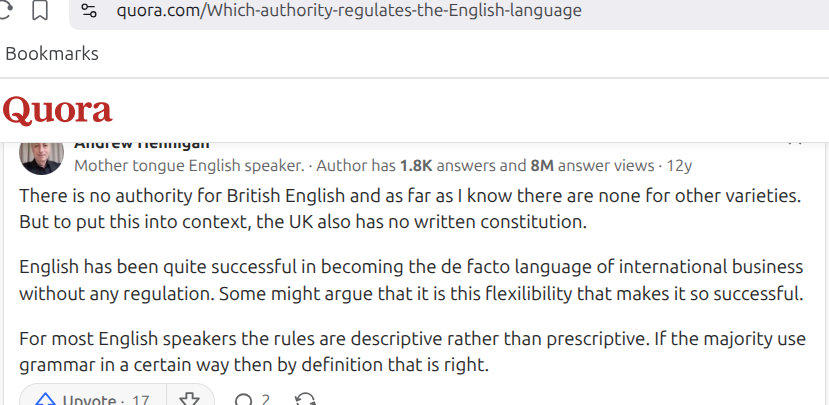
And; any majority has to start with one or few use events; does it mean that it is a wrong word until half +1 use such and then becomes right ?
Well the word 'constitution' relates to 'what is' rather than 'what is not'.
So the US constitution is based on the principle that certain rights are available to US citizens.
Other rights or priviledges are not guaranteed, but are not necessarily forbidden.England has the Magna Carta which is a very primitive guarantess of some rights for some people only.
It is often summarised by lawyers that
The english 'Constitution' says " You may do/have anything not specifically forbidden by Law"
The US constitution say "You may only do what it allows in the Constitution"
Neither is summary is totally true but it does contrast the philosophy behind the difference.
And the differences are becoming more and more blurred as time goes on.Applied to the English Language it is clear that you cannot found an language 'authority' on what is not', but you can on 'what is'.
-
Well I don't often link to other discussion sites, and I only found that one because I needed to fix a mobile phone, that was apparantly out of battery.
A replacement battery didn't fix it, so I looked for the ideas presented in that discussion concerning the charging circuitry and a loose ribbon cable.
In the event there was no ribbon cable, the micro usb was firmly soldered onto the one piece mainboard.
However disassembly and reassembly brought the old battery and system back to life.
But it still did not like the replacement battery - allegedy the same type number.
Interestingly when I tested the new and old batteries off load they both showefd 4.1 volts - a bit high for the nominal 3.7v.
~As I said there were many lesson for those who read the discussion, not least the need to keep Li-ion batteries topped up every few months.
My usage of portable power tools is diminished these days and rather intermittent and I do find the discipline prolongs active life PAL for those who rember the dogfood adververts.
-
Following a mobile phone charging issue I came across this intriguing discussion thread on reviving dead batteries and or devices.
It starts off with a phone but goes not to rechargeable tools (drill, chainsaws etc)
https://www.ukworkshop.co.uk/threads/how-i-charged-an-old-removable-mobile-phone-battery.146855/
I'm sure we could all learn something from this, for example DeWalt device battery terminal
-
-
Edited by studiot
1 hour ago, Genady said: I still don't see a difference between the two constructions mentioned above. The first says,
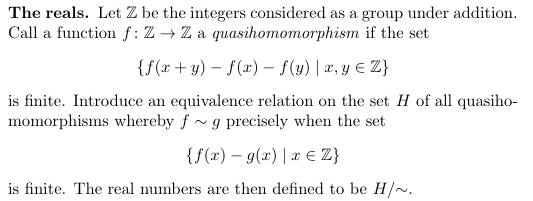
The second,
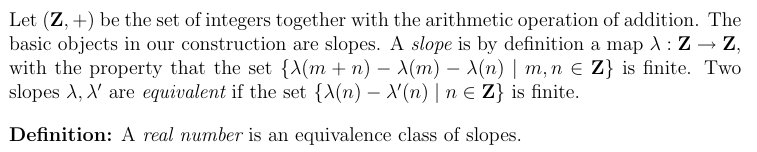
Does anybody see how they are different?
Yes I agree they are the same construction with different notation.
This is exactky what I mean by a plethora of notation.
-
3 minutes ago, KJW said: I don't understand who is who in the above. In the "Today I Learned in Mathematics" thread, only Genady and studiot were downvoted, and they were presumably by you (as the only person with the motive to downvote these two posters).
You don't actually have to post in a thread to 'vote', which is why I originally responded as I did for I did not then know who it was.
The mods can see who voted what, of course.
-
Here is a good (polite) way to contradict someone.
Just now, studiot said: Here is an excerpt from the Times of India that contradicts your statement.

The Times of India
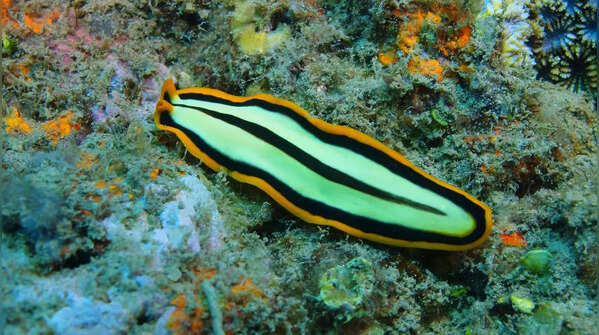
6 animals that live without a heart and still survive in...
We usually think of the heart as something every animal needs– pumping blood, carrying oxygen, and keeping the body alive. It’s seen as one of the most essential organs. But nature often breaks the ru -
7 hours ago, Dhamnekar Win,odd said: All living beings, animals, aquatic animals,
Here is an excerpt from the Times of India that contradicts your statement.
The Times of India
6 animals that live without a heart and still survive in...
We usually think of the heart as something every animal needs– pumping blood, carrying oxygen, and keeping the body alive. It’s seen as one of the most essential organs. But nature often breaks the ru6 animals that live without a heart and still survive in the wild
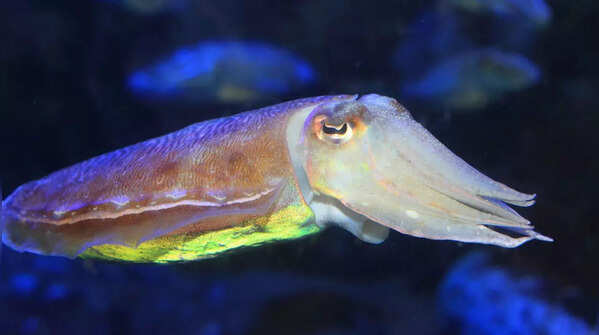
1/7
Unique creatures that live without a heart
We usually think of the heart as something every animal needs– pumping blood, carrying oxygen, and keeping the body alive. It’s seen as one of the most essential organs. But nature often breaks the rules. Believe it or not, some creatures live just fine without a heart or anything that pumps blood. These animals have found other ways to survive, showing us just how strange and amazing the natural world can be. In this article, we’ll explore a few of these fascinating species that live without a heartbeat.

Why did motivated reasoning evolve in humans?
in Psychiatry and Psychology
Not sure what you mean by brainwashing.
Not even sure that other animals engage in Otto's 'reasoning'.
That is what I meant by the difference between intuition and instinct.
Some animals have been known to chew their own foot off to escape a trap.
Less gory examples might be that different birds build different types of nests and beavers build all sorts of structures that benefit the environment.
But do any of these examples involve reasoning - or are they just instinct ?
Intuition, to me, seems to involve a form of reasoning where what happened in one instance is remembered and compared with and applied in a similar circustance on another occasion.