
studiot
Senior Members
-
Joined
-
Last visited
Everything posted by studiot
-
Another book collector. Welcome. Interesting collection range - movles, computer books and maths books. Please tell us more it will be an interesting discussion. But I suggest you start your own thread (good practice for you).
-
Is this for examination purposes ? I ask because UK A level exams are coming up and I was preparing some more detail for you but there is a small but important point I would like to clear up. Van der Waals proposed his froces in 1873, before experimental confirmation of either atoms or molecules. London proposed his quantum idea in 1930 to explain the work on inttermolecular forces that had taken plece in the intervening half century. Since then modern Chemistry has gained a vast amount of new data, both the VDW and London explanations have been refined and redefined several times. So it is important to use he definitions and explanations appropriate to your syllabus if this is exam material. The UK A level currently defines VDW as a general label for intermolecular forces and London forces as a special case.
-
Did you say mathematicians or charlatans ? Your photo looks like a luggage tag or other label to me, which suggested the company logo thought. It is definitely not a MedicAlert tag.
-
Suggest you do a trademark search, perhaps start here. https://www.trademarkia.com/logos-in-two-triangles-geometric-figures-and--260513-2-page-1
-
I think you missed my meaning about changes and patterns. A few years ago I noticed a daily pattern and built up quite an overall gain using your principle above. But each day the small gain was on different shares and, as you say sometimes I lost, but on balance there was a small steady overall gain. This pattern worked well for several years Then one day we had an unexpected big overall drop when nearly all shares dropped and most of that gain was wiped out.
-
I agree there are patterns, but there are many more underlying reasons and complications that sensei and swansont have mentioned. Theirs is a very simplified analysis. The timing of sudden, and sometimes large, changes is unpredictable and often catches out 'pattern followers'.
-
Good points, I like the last line especially. +1 But remember also this is a resurrected thread from 2018
-
I think that there are plenty of applied Physicists, Engineers and Technicians that would strongly disagree with this statement. But welcome to the discussion and SF.
-
Agree with exchemist. Yes description in words would be great, and also numbers if you measured any, inlcuding timescale for any reactions observed. The picture might tell us if there were other (carbonaceous) materials present that would have reacted strongly and quickly with the acid, fizzing.
-
Thanks. I should have added ' and dissolved gasses'.
-
Yes I think we are still well in information gathering and hypothesizing phase. +1 Information about high temperature, high pressure geomaterials is sparse. One comment about the water is that we are (or should be) talking about seawater. This, of course, contains many minerals and is not just the plain H2O that appears in the simplified chemical reactions.
-
If you are going to consider this, it is true that there is a greater depth of water covering the sea bed at high tide. But the 'strength' of the Earth's gravitational pull is reduced by the direct opposition of the Moon's gravitational pull, thus reducing the weight of that water. Yes there is some transfer of energy but is it concentrated enough to cause tectonic action ? Note it is thought that the plates preceeded the Moon in the history of the Earth, though both were quite early in that history.
-
Thanks for the valuable comments on aspects I had not considered. That is what a discussion site is for. 🙂
-
Good questions to ask creationists concern children. If there was a creation, why did the creator create no children ? Why do chilren 'grow up' ? What is the difference between evolving and growing up ? Why are children in general and the children that were reported after the creation different from their parents?
-
~At last someone has posted a scientific thread. +1 The oceans have 'a lot of weight' , but do they ? There are big chemical and mechanical differences in the crustal materials of the ocean floors and the land masses. Oceanic crust is largely basaltic rock of greater density than 'continental' crust which includes much lighter material. OK, so the continental material is 2.5 to 3 times as 'heavy' as water would be overlying the basal platform surface. Thus the oceans apply one half to one third of the load that is applied by continental material. Secondly most of the planet volcanic activity takes place at the bottom of the oceans, since they cover so much more of the surface. The ocean water dramatically reduces or prevents altogether the amount of solid material ejected into the atmousphere during eruptions. The water also quenches the molten rock much more rapidly than the atmousphere. As to the role of water in the origin of the Earth's plates, this is not known with any degree of certainty. Several different theories have been proposed. But we do not know when or how the water originally came to be there. We now think that this happened very early in the history of Earth, less than half a billion years after its formation, and this time is being pushed back and back. Our best guess is that plates formed shortly after the original semi-molten Earth cooled at the surface sufficiently to start crusting over. Contraction cracking in this crust was then thought to have occurred as a result of that cooling.
Thanks. +1
From this paper A flow reactor setup for photochemistry of biphasic gas/liquid reactions Article in Beilstein Journal of Organic Chemistry · August 2016 DOI: 10.3762/bjoc.12.170 3 authors, including: Axel Jacobi von Wangelin University of Hamburg
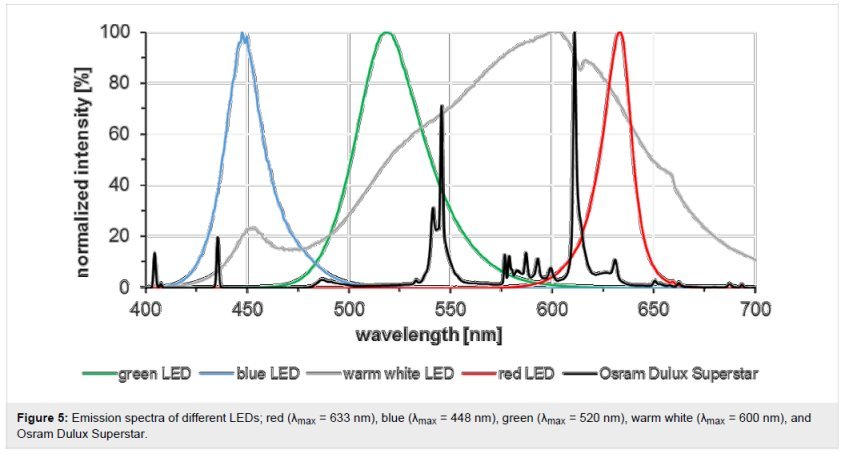 Adding some figures Visible light lies within the range 400 THz to 800 THz A typical red LED has a (peak) frequency of 474 THz and blue has 669 THz This makes the sum frequency 1183 THz ie > 800THz and the difference frequency 195 THz ie < 400 THz.
This is a key statement. Neither the sum nor the difference frequencies/wavelengths resulting from a heterodyining process will be anywhere near the visible spectrum. This is unlike radio waves where the results may still be in the radio spectrum. Although even there we can get audible 'heterodyne whistles'.
There is no problem with defining 'square roots'. Problems do arise when failing to distinguish between the square root function and a specific square root, just as with any function it is necessary to distinguish between the function itself and the value of that function at a particular point, often called 'the square root of ...' I have already defined a square root - and this applies equally well to negative as to positive numbers and to zero, which is neither positive nor negative. Now consider the number 4. My definition is satisfied by two different numbers +2 & -2. I hope we can agree that these are different. so multiply (+2) x (+2) or (-2) x (-2) Both of these products yield the initial value of 4, as per definition. So both are square roots. But what happens if you multiply one by the other ? (-2) x (+2) or (+2) x (-2) Neither are equal to the initial value of +4 ! You cannot take the negative sign inside the square root sign, like you do with brackets, which is what you appear to be trying to do. [math] - \sqrt 4 = \sqrt { - 4} [/math] is just plain wrong - it is never right. Many problems with functions arise because people only consider the rule and forget to consider the Domain and/or the CoDomain as well. This consideration is necessary when considering the whole function.
Oh dear, Oh dear, Oh dear. You should have believed me when I strongly suggested you took notice of what uncool says. Right at the beginning. The square root of something is defined as that which which when multiplied by itself yields that very something. But multiplying the suqare root of minus one by the square root of plus one is not multiplying something by itself, since the square root of mius one is not the same as the square root of plus one.
I really don't see where you are trying to get to. A function has three parts so you are right in saying that a function is a map from one set to another (which may be the same set). The base set or set mapped from is called the Domain and the target set or set mapped to is called the CoDomain. A function comprises the Domain, the CoDomain and a rule that links members of the Domain to members of the CoDomain. Many (or even all) members of the Domain may be linked to some particular member of the CoDomain, this is called many-to-one. But no member of the Domain may be linked to more than one member of the Codomain. This would called one-to-many and is not allowed. A function that links all the members of the domain to one single member of the CoDomain is called a constant function. Getting your head around all this is probabaly not worth the effort as it will not help you much, if at all. It is better to think of the three components as being two variables (say x and y since we are discussing numbers) and a rule or formula connecting them. The Domain is called the independant variable (x) and the CoDomain is called the dependant variable (y). For most purposes the Domain will be the set of real numbers or the real number line. The constant function has the rule y = a constant, say y = 5. This means that for each and every value of x the value of y is 5. This function can indeed be differentiated and the value of its derivaitve for all values of x is zero. I hope you will find this little exposition helpful and will listen to it.
When I first read this thread I thought dendrites ? But you say these are organic. Dendrites are similar inorganic structures. Here is a paper on decimetre scale ones. https://www.researchgate.net/publication/319654805_Pyrite-walled_tube_structures_in_a_Mesoproterozoic_sediment-hosted_metal_sulfide_deposit/link/59d5ac1a0f7e9b7a7e4677a8/download
Have you done an energy balance for the project or a cash flow plan ?
Adding some figures Visible light lies within the range 400 THz to 800 THz A typical red LED has a (peak) frequency of 474 THz and blue has 669 THz This makes the sum frequency 1183 THz ie > 800THz and the difference frequency 195 THz ie < 400 THz.
This is a key statement. Neither the sum nor the difference frequencies/wavelengths resulting from a heterodyining process will be anywhere near the visible spectrum. This is unlike radio waves where the results may still be in the radio spectrum. Although even there we can get audible 'heterodyne whistles'.
There is no problem with defining 'square roots'. Problems do arise when failing to distinguish between the square root function and a specific square root, just as with any function it is necessary to distinguish between the function itself and the value of that function at a particular point, often called 'the square root of ...' I have already defined a square root - and this applies equally well to negative as to positive numbers and to zero, which is neither positive nor negative. Now consider the number 4. My definition is satisfied by two different numbers +2 & -2. I hope we can agree that these are different. so multiply (+2) x (+2) or (-2) x (-2) Both of these products yield the initial value of 4, as per definition. So both are square roots. But what happens if you multiply one by the other ? (-2) x (+2) or (+2) x (-2) Neither are equal to the initial value of +4 ! You cannot take the negative sign inside the square root sign, like you do with brackets, which is what you appear to be trying to do. [math] - \sqrt 4 = \sqrt { - 4} [/math] is just plain wrong - it is never right. Many problems with functions arise because people only consider the rule and forget to consider the Domain and/or the CoDomain as well. This consideration is necessary when considering the whole function.
Oh dear, Oh dear, Oh dear. You should have believed me when I strongly suggested you took notice of what uncool says. Right at the beginning. The square root of something is defined as that which which when multiplied by itself yields that very something. But multiplying the suqare root of minus one by the square root of plus one is not multiplying something by itself, since the square root of mius one is not the same as the square root of plus one.
I really don't see where you are trying to get to. A function has three parts so you are right in saying that a function is a map from one set to another (which may be the same set). The base set or set mapped from is called the Domain and the target set or set mapped to is called the CoDomain. A function comprises the Domain, the CoDomain and a rule that links members of the Domain to members of the CoDomain. Many (or even all) members of the Domain may be linked to some particular member of the CoDomain, this is called many-to-one. But no member of the Domain may be linked to more than one member of the Codomain. This would called one-to-many and is not allowed. A function that links all the members of the domain to one single member of the CoDomain is called a constant function. Getting your head around all this is probabaly not worth the effort as it will not help you much, if at all. It is better to think of the three components as being two variables (say x and y since we are discussing numbers) and a rule or formula connecting them. The Domain is called the independant variable (x) and the CoDomain is called the dependant variable (y). For most purposes the Domain will be the set of real numbers or the real number line. The constant function has the rule y = a constant, say y = 5. This means that for each and every value of x the value of y is 5. This function can indeed be differentiated and the value of its derivaitve for all values of x is zero. I hope you will find this little exposition helpful and will listen to it.
When I first read this thread I thought dendrites ? But you say these are organic. Dendrites are similar inorganic structures. Here is a paper on decimetre scale ones. https://www.researchgate.net/publication/319654805_Pyrite-walled_tube_structures_in_a_Mesoproterozoic_sediment-hosted_metal_sulfide_deposit/link/59d5ac1a0f7e9b7a7e4677a8/download
Have you done an energy balance for the project or a cash flow plan ?
Important Information
We have placed cookies on your device to help make this website better. You can adjust your cookie settings, otherwise we'll assume you're okay to continue.