
studiot
Senior Members
-
Joined
-
Last visited
Everything posted by studiot
-
What do you know ? This morning I said to someone "when I have had breakfast" , as a short form for "I will do that, when I have had breakfast" which again is a colloquial abbreviation for the full future perfect, "when I will have had breakfast".
-
It should be noted that the screen upon which the pattern, interference or otherwise , impinges is also a detector. The results with and without that screen should be considered.
-
Indeed I was keeping them in reserve. But now you have outed them. +1
-
+1 for your previous post. It made me laugh. Yes, unlikely, but since dogs have sometimes been left money in a will, not impossible. But I do take you point about correctness. One thing we had drummed (dinned) into us at school was that to be correct English not only did the words have to follow 'the rule' but the collection of words also had to 'make sense' as well as blindly following the rules. As regards possession, ownershhip and possession are not necessarily the same thing. Again using my car example, many people 'possess' a company car. But they do not the own of that car. As as far as I am concerned, stative verbs are an artificial distinction, as are dynamic verbs. You could, just as easily argue, that something cannot be in a particular 'state' without a dynamic verb signifying its entry into that state. So there is some complementarity in the concepts.
-
Thank you, yes there are a lot of past tenses, perhaps I mixed some up. Remembering that the original source was a teaching programme for English as a foreign language, I would observe that people are more likely to talk about owning than possessing, which actually has a slightly specialised meaning. But of course these days the most likely verb is "I had a ....... something or another", which is pretty general. But as to any of these being a 'stative verb' personally I think that is ridiculous, judging by the Wiki definition of stative as fixed for all time This analysis is flawed as can easily bee seen by realising that both the verbs to know and to understand can be reversed, eg in mental deterioration conditions.
-
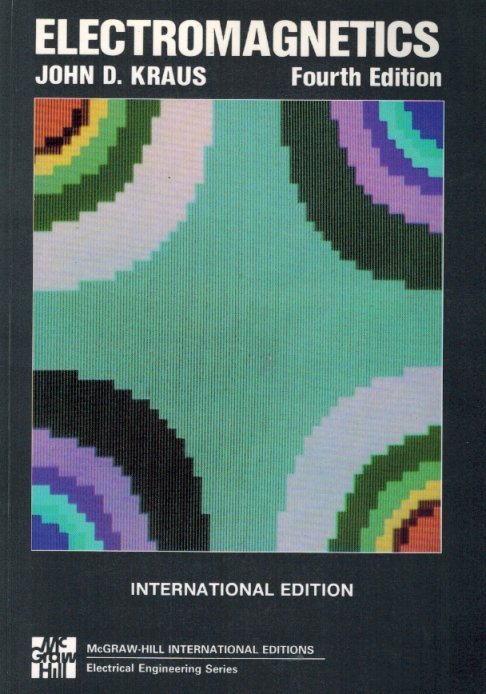
Answering this would take too much space in a discussion forum. My best suggestion is to get hold of this book. Kraus deals with all the necessary theory, and the practical detail including tables of measurements on a variety of materials, including metals. One thing to note is that the higher the frequency the more of the electromagnetic signal (current, voltage, power) trevels on the outer skin of the metal, rather than through the metal.
-
Is this homework, looks like you have copy pasted from a question sheet ?
-
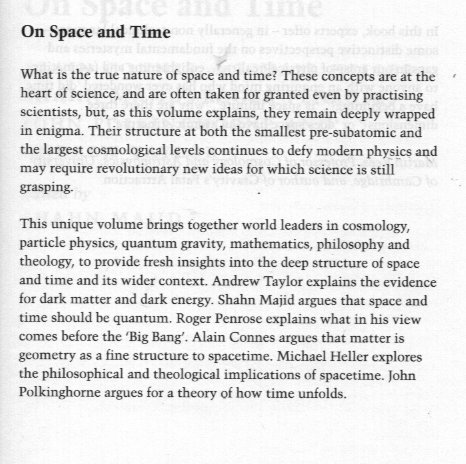
Surely, if I have misunderstood, you can explain your point in more detail so I can understand ? The flysheet explains the scope of the book, which encapsulates the ongoing debate about the granularity (quantisation) or continuity of space and time and spacetime. Do you need more ?
-
According to some linguistics theories. But hey, not all of them. I agree that "I will have possessed 3 cakes." is unusual English as we don't usually talk about possessing cakes. However I suggest my examples of possessing cars is the only English construction to get those particular meanings across and that we often talk about the cars we have possessed or will possess or will have possessed in common parlance. I also agree that your English is pretty good. Edit I should add that I must disagree with some of the English examples Wiki gives of 'stative' verbs. My German is not good enough to comment on the German examples, although I wonder if the whole idea comes from German where noun gender and case play a differ part, from that in English and the idea makes perhaps more sense.
-
Perhaps I should have noted before that the Wiki article refers to other models/explanations of force - the article is fairly comprehensive. That is why I said 'force' and why I referred to 'interactions'. I suggest you get a good hold on the simple everday idea of force before looking at, for instance, the exchange particle model. Remember they are all models, none are perfect.
-
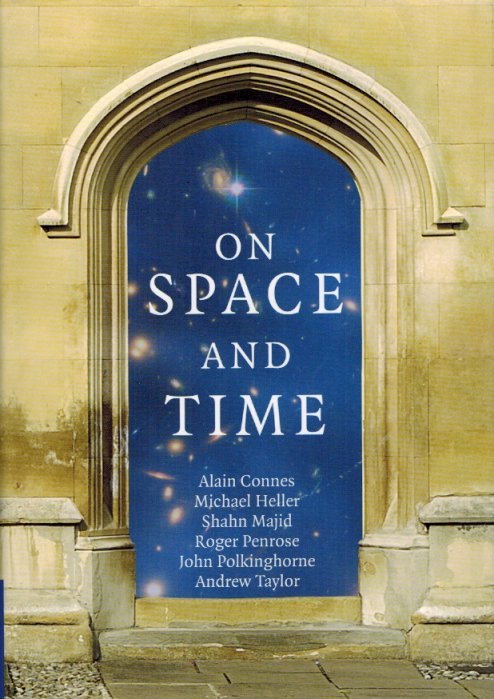
Except that you did not do this but made the bold claim that everything is quantised, in reply to my observation that quantisation of some quantities is still under debate. Here is my reason for claiming that debate for space and time. A recent technical book from Cambridge University Conversely I asked for yours claiming no debate for everything.
-
B says that, at some time in the future, I will have made 3 cakes and that I willstill have all three. A say that, at some time in the future, I will have made 3 cakes but that I might have disposed of (ate, gave away, threw away) one or more of them, Nothing wrong with either the original A / B statements or Country Boy's explanation. My apologies for the crap English turned out by the input editor here on my last post. Possibly the easiest way to understand the cakes, which we do not normally talk about possessing, is to pick up on Joigus' car example. A) Once I sell another car I will have possessed 3 cars. That is I have already possessed and sold 2 cars and I currently posses a third. Once I sell it I will no longer posses it so I will then have possessed 3 cars. B) Once I sell another car I will possess 3 cars. That is I currently possess 4 cars. So once I sell another car I will then posses one less or 3 cars.
-
Which force predominates depends upon the distance the interaction operates. That is often stated at bit more vaguely as the scale. When considered as 'forces' the scale or distance order ( not strength order) is weak < strong < electromagnetic < gravity. So the weak force predominates at the very shortest scales, smaller than nuclear particles, The strong force predominates at scales the size of the nucleus The electromagnetic force predominates at scales the size of a molecule (ie bigger than an atom) The gravitational force predominatres at the size of galaxies. This Wiki article has readable presentations of all this and more. Note the key word is interactions, not forces https://en.wikipedia.org/wiki/Fundamental_interaction At scales the size of the nucleus and smaller
-
Please confirm that the bellshaped top will only screw onto the knurled bottom as shown in the left hand picture. As shown it would be pretty useless as a drawer handle but if it would scew on the other way up it might be as iNow suggests. Otherwise perhaps it is a pair of brass paperweights from a desk, perhaps originally made as an apprentices's 'Master' piece.
-
And your justification for this statement is ?
-
Indeed so in a nutshell. +1 Just add too much emphasis on fancy words.
-
That is still a matter of open debate in the scientific world.
-
Well done +1
-
Exactly why I suggested you narrow down the question. Swansont clearly had similar ideas in asking for specific examples. To be general about your question I would say that too much distinction is made between 'quantum' and 'classical'. A system has certain behaviours which are driven by or influenced by specifc properties. Those specific properties may have no influence at all on other behaviours of the system where you would need to invoke other different properties as appropriate. Sometimes these properties will be quantum in origin, sometimes classical and sometimes the boundaries will be blurred. There is no reason preventing that both quantum and classical properties being involved. Two perfectly respectable classical objects, a hydrogen atom and an iodine atom, approach each other, a respectable classical action. But if that approach is too close then a quantum property is brought into play and the atoms 'bond' together. Classical macro Chemistry is based on this. In the macro world, more complicated macro unions can arise with quantum properties. Chemists call these Ligands. Conversely Physicists distinguish metals and semiconductors, whose behaviour relies heavily on the quantum properties of the constituents. So you can have your electronic devices.
-
I think you need to cast some more bread upon the waters or fish with a finer net. The scope of your proposition seems too wide to me. There are lots of different reasons why analysing the behaviour of a large aggregate may introduce additional features non existant or negligable in small ones.
-
Well you introduced the wavefunction which is the dependent variable in the (Schrodinger et al) equation but it does not depend upon the spin quantum number so I would not expect that to be represented. I mus say again, thanks to all, this discussion is helping me with my thinking about entanglement.
-
No it just demonstrates my point which was that the posting a picture on social media can actually work, but this was a practice you condemned
-
I'd say this is just wrong, and not borne out by experience. Firstly it encourages the perpetrator (dog owner) not to bother sorting his/her problem as someone else will do it. Secondly posting an indignation picture definitely works and produces results. https://www.bbc.co.uk/news/uk-scotland-glasgow-west-58887591
-
But that is one method of deriving the wavefunction of a bonding (bonded) orbital. [math]\psi = {\psi _A} + \lambda {\psi _B}[/math] Where lambda minimises [math]\frac{{\int {\psi H\psi d\tau } }}{{\int {{\psi ^2}} d\tau }}[/math]
-
Definitely some interesting thoughts here and I do appreciate that you you are trying to connect via an abacus or something but I fear that brevity may have klead to some abiguity. If at all possible I would appreciate amplification of the following points. For what purpose do you 'need to know' these facts ? How does that affect the ongoing entanglement? Yes, depending upon what you mean by 'non separability'. If you mean what swansont said ie that you cannot analyse the system as two independent parts agreed. But if you mean you can't physically separate the parts, thereby breaking the entanglement, the no of course you can break the entanglement. That would correspond to the MO method, but surely the LCAO method is a linear proportion sum of the respective parts ? Strictly you do not need to know all the quantum numbers, just the spin number of one electron. But then you would not have identified the orbital, just the entanglement. I seem to have commited the same brevity sin I accused Markus of.