studiot
Senior Members
-
Joined
-
Last visited
Everything posted by studiot
-
Are we talking established Science or speculation here ? If speculation what about some supporting facts, not involving fantasies like dimensions of experience ?
-
Where is this from ? Surely it is a trick question, I have never seen so many distractors in a question before.
-
You do not need a measure in standard set theory to define a point, any more than you need a coordinate system or a dimension theory. A point, eg in the Reals, is a subset (partition) with exactly one entry. But yes using using the apparatus of epsilon delta, or of measure theory leads to your definition or Markus' limit. Conscious Energy has left the room, courtesy Swansont. But it was never clear whether they were referring to a mathematical or physical point.
-
Is this a schoold project ? Very nice if so. I'd love to see how probability distributions are used to distinguish between a snadbag and a maracas ? OK if we are talking about sounds that can be made using granular materials, I would start but observing the difference between sounds generated by 'soft' materials such as flour, soft breadcrumbs, foam rubber chunks etc and 'Hard' materials such as macaroni, dry sand gains, hard plastic beads, steel shot, etc. A simple sound test can be made by pouring a stream of these onto a) a hard surface such as a formica table top, a sheet of steel, glass or marble etc. b) a soft surface such as a rubber sheet, a cloth over the hard surfaces, etc. For each test you may be able to distinguish two types of sound. a) The sound of the stream of granules impacting upon the test surface. b) The sound the stream makes as the particles bump together as you pour. For a maracas you need (a) in both cases. The sound is made by stopping and starting the 'stream', as it bumps agains first one side then the other of the container, followed by a trailing sound of the hard particles bunmping together because the maracas is not full. For a sandbag you need a soft cloth surface (bag) more nearly fully filled and you strike the bag, which you do not do with the maracas (which you shake). The principle sound will be the softer sound of a few of the grains rubbing rather than bumping together as the bag and contents distort in shape. There will be no impact sounds against the soft cloth walls. Sand grains are hard in both cases. In the case of flour it is the flour grains themselves whicha re soft and so capable of significant distortion when bumped against each other. It is this distortion that absorbs the energy which would be given out as sound if the grains were hard. I wish you well with your investigation, It is a fine project.
-
In Autumn, (note spelling) actually they don't 'turn' yellow, red etc. What actually happens is that the plant stops producing chlorophyl, which give plants their green colour and masks the colouring of any other chemicals. As the chlorophyl dissipates the green fades away leaving tthe base colour. Then the residual chemicals start to form darker sugars which make the leaves darken from yellow through orange, red and brown.
-
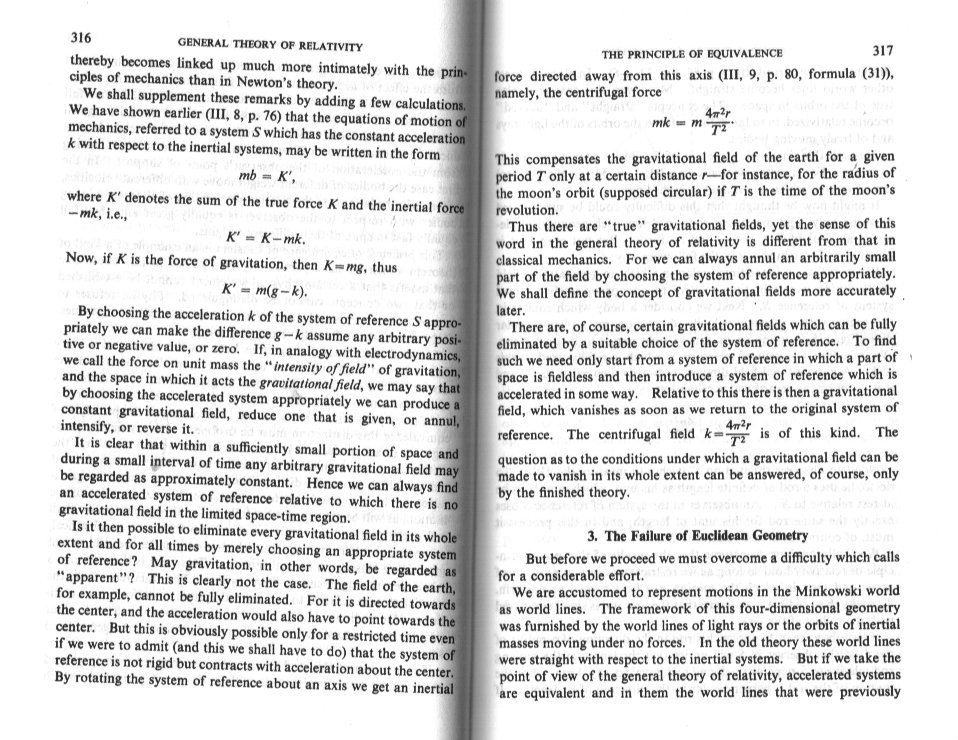
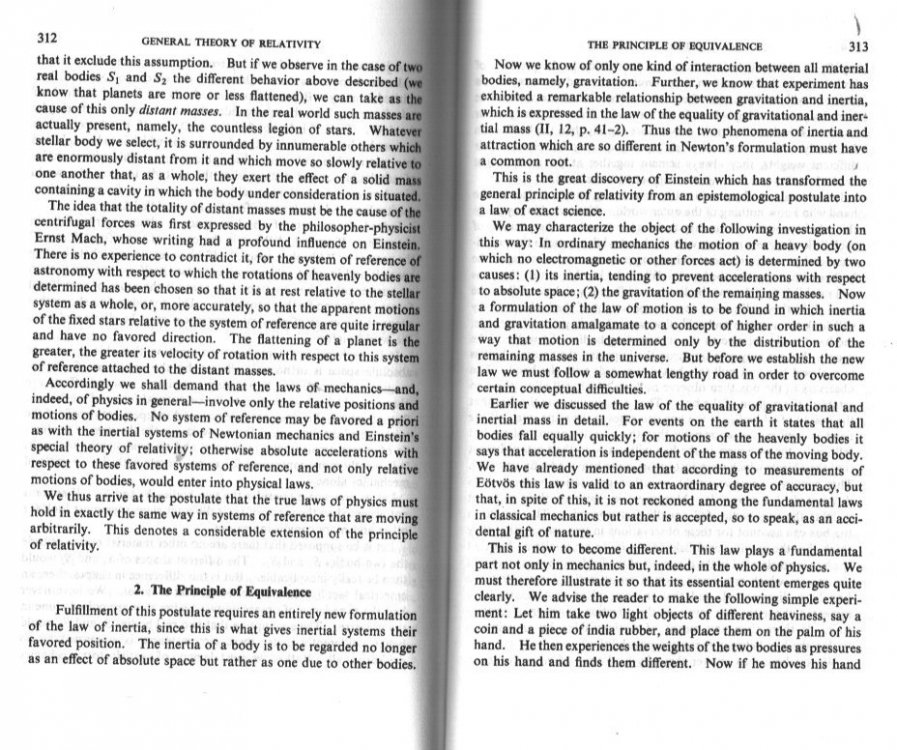
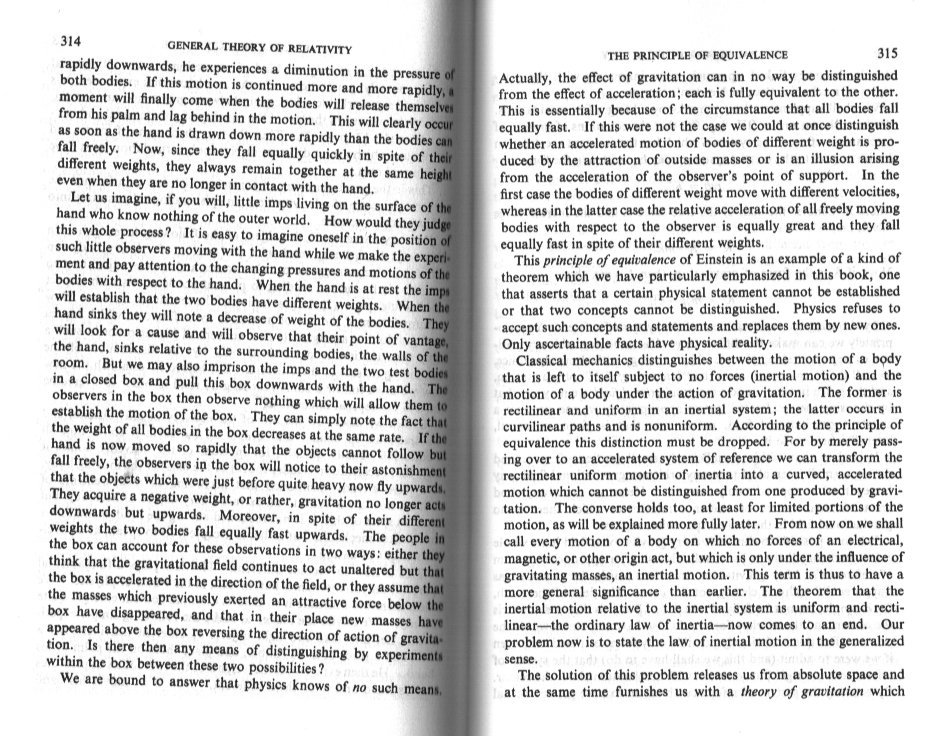
Read this (1962 edition) from Einsteins's friend ,nobel Physicist, Max Born. Sorry it's all words. No Pictures.
-
From the 1990s to 2016 My annual usage was 2500 to 4000 units (kw-hrs). Heating and hot water was additional by gas. In 2016 I installed a heat pump and did away with the gas. Since then usage has not quite doubled, although being home more with Covid restrictions, it was higher in the last two years. Since the national intention is to phase out gas boilers, I expect this trend to widen.
-
First let me say what a well presented question you have asked. Keep this standard up and you will go far. +1 Now the books. First the Physics. The original editions of this book were written by Professors Sears and Zemansky in 1949. So you see that it has a very long history and pedigree and is very well respected. Young and later Freedman joined the team and the task of keeping it up to date. The material is aimed at high school and on into first year university level and offers a geat deal of excellent explanation and promotes understanding rather than clever mathematics. Yes understanding classical calculus is necessary to get the most out of this book, but not to the level of speciality you will find in Thomas. Having said that, Thomas is also a very good book (see below). But remember that students generally learn both the physics and Mathematics in tandem. So you will lear some Physics then some Mathematics, which will enable you to learn some more Physics ... and so on. Now the Mathematics. I have already praised Thomas. It contains a thorough introduction to 'the calculus' for students but to a depth and facility greater than is required for Physics as it really is a Mathematics book. So you will only need to learn it all if you are going to do further Mathematics. It will, however, provide the understanding you need to follow the Physics in Young etc. It should also serve well as a reference to go back to as you But it is not a pure Mathematics book and would not be of much use (except as background) in a formal University course in Analysis (The posh part of maths that includes calculus). But then formal university Analysis books are not much use in Physics either. Better than that it provides an elementary introduction to some more advanced mathematical topics, used in more modern Physics. For instance it provides a useful introduction to topics such as differential forms which you might require when going from first degree Phyics into postgrad. So both excellent choices that will last you a long time to come.
-
-
Hydrogen, Acetylene and ethane are all gases at STP so 0.1M is an unusual way to measure concentration. Any information on this ?
-
I think I need a holiday. First class catch, I misread the reply. + 1 😳
-
OK so you need the coefficient of restitution. This pdf is an advanced treatment, but includes explanation of the basics. http://citeseerx.ist.psu.edu/viewdoc/download?doi=10.1.1.402.4689&rep=rep1&type=pdf Note the poly tube will be in compression not tension at impact.
-
Depends upon if you are considering an elastic or inelastic impact ?
-
Is this homework ? Patterns, fingerprints, retinal scans, captcha type Q & A ................
-
Indeed theoretical physicists at Oxford University have a whole department studying "The Science of Can and Can't" under David Deutsch. Stangely no one else seems interested in my thread on that subject.
-
Thank you for the response. I look forward to hearing what others have to say.
-
This to introduce a discussion on the proposition that Philosophy is still valuable in this day and age, dominated as it is by scientific considerations. Some have argued that Philosophy has become redundant in modern times and that Science can somehow replace all its functions. I argue that this is not the case, but that the issues have moved on for some and we would be well served to stop re-enacting old battles and put our efforts into new matters. By way of example here is a sequence of instances culminating in a modern day issue. The ancient Greeks were so distressed about irrational numbers that they tried to forcibly suppress knowledge of them. In the Middle Ages, a similar thing happend with the discovery of imaginary numbers. In the late 19th and early 20th centuries Science learned to exclude uncomfortable matters 'by definition'. Today that exclusion process is being applied to 'information' and full consideration of its nature. I argue that Philosophy offers an independent forum for the conduction of such consideration, regardless of how useful and successful a tightly conrolled scientific definition might be.
-
And thereby lies a mathematical contradiction. Mu-nought and epsilon-nought in your formula are scalar constants. That means they are independent of direction. The condition for them to become direction dependent is that they are no longer scalars but in fact tensors (not even vectors will do). This is in fact achieved under non isotropic conditions. However the rub is that there is no such thing as the square root of the ratio of two tensors.
-
Hopefully the trash can is not quite full yet. I would recommend anyone who would like further informatuion to start their own thread, rather than try to disentangle this one.
-
I thank you for responding to one thing I said, but I am sorry that you simple demonstrated that you don't know what you are talking about. If you want more explanation all you had to do was ask. Instead you chose, yet again, to challenge an attempt to help with nonsense. How can a point in space be counted a zero ? This means that if I label a point 'zero' and I am counting points that I have no points ie you are saying a point is not a point ! I am becoming weary of putting time and effort into this to no apparent purpose.
-
The first two lines are not true. I recently quoted Euclid axioms which state exactly the last line to someone. Was that someone yourself ?
-
I agree with both you and swansont, however I was holding off infinity until we had determined other definitions since CE is mixing up physics and maths, as several people have now commented. It should also be pointed out that there is more than one type of infinity (or meaning to the word) which makes things more complicated. I have already pointed out the easier question that we need CE's definition of natural numbers. So thank you for this @Conscious Energy OK so you wish to include 0 in the natural numbers. That is fine. Some Mathematicians include zero some do not. Personally I prefer to start at 1 because it makes the philosophy of numbers easier and more elegant. Either way we can state the following axioms to obtain all the natural numbers. 1) 0 is the first number. 2) Every number has a successor number, obtained by incrementing that number by 1. It follows from these two axioms that 0 is the smallest natural number but there is no largest natural number. This leads directly on to one type of infinity as a non terminating process.
-
Yes and I have several books on the philosophy of the Natural Numbers, along with large sections in many more maths books. You are using a different version of the Natural Numbers from the rest of us. You have not answered my question: Further, just because this is the philosophy section, it does not entitle you make make unsupported claims such as "youcannot have space without time", most especially not in support of other wild musings. You have asked several such questions and been answered before. Even though, just like with the Natural Numbers I do not know what you mean by the much more difficult notion to tie down, that of infinity. Be all that as it may, I will offer you some hopefully useful thoughts on these questions. But they will only be useful if you take some note of them, instead of immediately trying to challenge them with unconventional interpretations of conventional definitions. OK so space, with or without time and Infinity for a physical object. Using zero and the positive integers we can propose temporal and spatial dimensions as follows: Let S1, S2, S3, S4.......... denote spatial dimensions. Let T1, T2, T3, T4.......... denote temporal dimensions. Then for each of 0, S1, S2, S3, S4.......... spatial dimensions we can propose 0, T1, T2, T3, T4.......... temporal dimensions Now we can do the maths of how each of these situations would operate, ie what our universe would be like if there were eg say only two spatial and one temporal dimensions, two spatial and zero temporal, two temporal and zero spatial and so on. Then we can do the physics and compare our observations on our universe to see which one matches our maths the best. Again there are many books and meaty subsections of books and papers doing exactly this. The results of this is why we believe our ordinary sense impression that there are three spatial and one time dimensions. For any other combination we can derive mathematical results we do not observe. OK so to consider an physical object existing in this 3 + 1 universe and the relationship to infinity. Let us say a building stone in a dry stone wall. Say we move this brick 1 metre to the left, so that instead of being the fourthe stone from the left hand corner of the wall it is now a cornerstone. What have we done ? Well we have changed its spatial position and in doing so did the stone disappear at any point in the move and reappear anywhere else or did it at some instant occupy every point lying between its initial and final position ? I would say we have no evidence that any stone has ever done the former but has only ever passed through every point on its way. So what links the initial and final points ? Mathematically the word is continuity. And continuity requires infinite division. Now you have mentioned Planck lengths. Swansont has told you that we cannot measure within a PL. But he did not say that the points in the space within do not exist, just that we can't measure there. And continuity requires the existence of these points. So by the mathematics of continuity (infinite division) we have a physical infinite. The interesting thing to learn from all this is that an infinite sum can add up to a finite total, which is the principal underlying 'limits', another specialist term that you are so loosely bandying about. Note the importance of recognising and taking note of what others say.
-
Surely it is time this thread was moved from physics to the rotary trash can ?
-
I asked you to be mathematically precise. So please avoid mixing up mathematics and other topics, particularly physics. This thread is claimed to be about the 'Natural numbers', which is a precisely defined mathematical description. Do you know what the natural numbers are ?