
studiot
Senior Members
-
Joined
-
Last visited
Everything posted by studiot
-
The blue ones only come in six-packs.
-
Ask Alice or Dodds
-
I thought I explained how it does indeed 'describe the difference' ? Was there something that needs further explanation ?
-
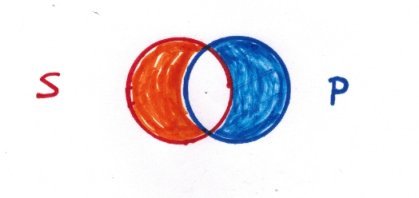
That's rich when I have been saying that and keeptrying to bring the thread back to that opening question. In particular I have identified everything that is a difference between S and P, mathematically but no one (yourself included) seems interested. Anyway here is a Venn diagram to illustracte my point. If we take all that is Science (red S ring) and add all that is Philosophy (blue P ring) and subtract everything that is common to both (white lenticular shape) then what remains is everything that is different between Science and Philosophy (the combination of the red and blue lunes) Furthermore to avoid the impression that Science only consists of Physics, here is an example of something that definitely belong firmly in the red area. A scientist measures the wingspan of a red admiral butterfly. As far as I can tell this has no philosophical value at all, except that, along with my emboldened quote from Eise, it introduces a comment about the philosophy of Science. Eise says 'might be'. This is a very ill quantified statement. A Philosopher's statement (no offence intended) Science has developed several specific techniques for improving on such philosophical statements, indeed we have already seen one example that has again been ignored here. The contraction mapping (Banach) theorem. In the case of might be Science has developed probabiltiy and statistics theory. So the Scientist measuring his butterfly measurement is in a position to offer his measurement scientifically, within tolerance limits and perhaps as an average, perhaps compared in some way to a standard or other wingspans or in relation to a bodyweight to span ratio or whatever. Philosophers who seek truth do not work in this sort of context. So here are some major differences between S and P.
-
Instead of replying here, which would be off topic, I have started another thread
-
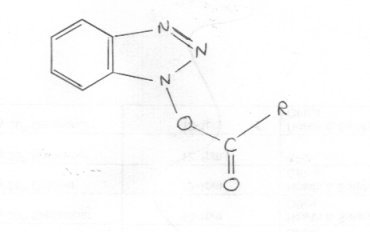
The thread was inspired by mention of the Scientific Method (SM) in another thread, where detailed discussion of the method would be off topic. Additionally it was inspired by the observation that the SM is all too often introduced as representing all of Science. Hence the title question here. Is the Scientific Method all there is to Science ? As a discussion starter example is the synthesis of this compound nothing to do with Science as it is clearly not part of the SM as outlined above. Or is it some other pat of Science?
-
Look here https://www.grc.nasa.gov/www/k-12/Numbers/Math/documents/Tensors_TM2002211716.pdf
-
Sorry I don't understand your comment, please expand. Note there are several succeeding posts representing a discussion with swansont about this, culminating in my last post couched in set theory that everyone seems to want to ignore. The set theory one can also be expressed in English, logic theory in connective words (and or etc) , logic theory in symbols, and a geometrical representation as a Venn diagram.
-
I really don't see the relevence of this to the topic which is clearly stated What is the real difference between Science and Philosophy. Well we can do this in formal set theory Let S be the set of all matters Science and P be the set of all matter Philosophic Then the real or total difference is [math]S \cup P - S \cap P[/math] or if you prefer [math]\left| {S - P} \right| + \left| {P - S} \right|[/math] If you consider they have no matters in common (no overlap) then [math]S \cap P = \emptyset [/math] and the difference comprises the whole of Science and Philosophy combined.
-
Of course it is Science. I don't see the issue. Do you hold that something that is part of Science cannot also be part of Philosophy. Therefore there is no overlap ? There is Mathematics (and Physics and other Science) in Music, which is part of Art. Is there no overlap there ? But just as there is plenty of Maths, Science etc that is not Music and plenty of music that is not mathematically based, so knowing the principle of and atomic explosion will not by itself enable you to build a bomb. And I have already laid out my stall that modern philosophy is about the principles of other disciplines. IOW it is their principles that form the overlap.
-
The most famous counterexample to this would probably be Einstein and the solutions to his General Relativity Field Equations. Einstein had only one solution and was flabberghasted when other came up with more solutions, first De Sitter and then Friedmann etc.
-
I did say football didn't I ? Perhaps you understand it better as soccer. The bell rings as you kick it along the ground.
-
Really ? So why did you specifically exclude it ? At least you accede there is such a thing as philosophy of physics. The principle of creating a critical mass of fissionable material. I don't understand the allusion.
-
This would moral pholosophy of atom bombs, not the philosophy of the physics of atom bombs (which I specified). Glad you came up with an alternative example to mine to demonstrate this point.
-
A fine example of the difference that arises around the overlap between Physics and Philosophy would be the construction of an atom bomb. (Yes swans I am being provacative not calling it nuclear) The philosophy of how to build an atom bomb can be found in several boys own and other popular magazines. Yes the principles are all there but the articles would not enable anyone to build a successful bomb. You need the special extra physics knowledge that physicists would bring that was not and never has been part of philosophy. Just look at the number of (famous) specialists that were needed to bring the first one to fruition.
-
I was impressed to learn that the ball used in paralympic blind football contains a bell.
-
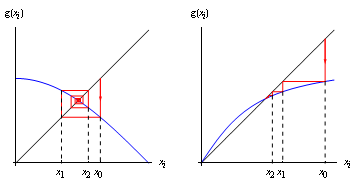
That last sentence suggest you should read what I actually said, properly. Wiki has a good pictorial representation https://en.wikipedia.org/wiki/Fixed-point_iteration and
-
It seems to me that Science says "The laser will never be clear at the other end of the optical cable unless it is correctly aligned"
-
You seem to mostly agree with my comments. Yes Philosophy (got it spelled right this time) overlaps many other disciplines. You know I always hesitate to say all. And that includes Science, as a general term. But these are similaraties, even samenesses. I still like to distinguish different branches of Science as in Materials Science, Earth Science ans so on. I suggested Materials Science way back because it was probably the first bit of 'Science' conducted by humans. My use of the separating slash it to try my best to overcome communication difficulties, introduced by differences of definition, and get my point across. So I offer a range of words of similar meaning, separated by slashes. In this instance I could have also included pith and essence.
-
Graph theory is a geometric way of representing relations. The most basic is the elementary relation is the connection. eg A is connected to B, but A is not connected to C etc. Much of elementary graph theory - the travelling salesman, konigsburg bridges etc is devoted to solving simple networks possessing only the connectivity relation. When programmed as matrices for computing this use what is called the incidence matrix. This is not much use for spacetime however. The next up is the weighted connection and we can use the invariants as weights, noting the in spacetime every point is connected to every other point. 'Graphs' were developed for solving sets of simultaneous equations by geometric reduction proceedures. These (not to be confused with schoolboy xy plots as graphs) have been called flow graphs and set of quite sophisticated equations can be solved this way both linear and non linear including self regenerative equations. I have speculated before (though not here) that these would hold out much hope for incorporating the more complicated relations inherent in say GR. They have been used to do this with the stress tensor, that Mordred was so fond of. A pity he is also not with us for this discussion.
-
Hello, Eise nice to hear from you again. Science and Philosophy have some differences and some overlap. And this topic is supposedly about the differences but there has been precious little discussion of these differences do far. I would venture to suggest it is worthwhile giving some consideration to the ovelap or where they are the same as well, since this can actually highlight differences. So here is an expansion of what I said earlier. In respect of data I hold that (modern) philosophy is interested in/about the broad/core/underlying principles. It is not interested in all the fine detail. Science on the other hand is dedicated to observing/recording/correlating/catelogueing all the detail, no matter how fine. This is one difference - Why should there be only one difference as implied by Dimreaper's question ? So are there more ? As regards the truth of knowledge, I have some knowledge of Harry Potter. Is that true of false ? I hold this is an inappropriate question as some of it is true (HP is a character in a fictional series of books) and some of it is false, as in the first line of the first book, "Harry Potter is a wizard". As regards @Davy_Jones comment on Have you heard of Banach's fixed point theorem ? Banach spaces are a branch of Mathematics that do precisely this. But that does not make them universally applicable. In fact there is considerable theory as to the applicability of the technique because it has very important applicability in Applied Maths and Computing. Finally I have observed that both Science and Philosophy need qualifying to be complete In studying the core principles of other disciplines, Philosophy overlaps many which Science does not For example the the Philosophy of the Arts, Moral Philosophy , Relious Philous Pholosophy and so on. Equally they sometime both overlap differently on some subjects as my earlier example of fishing shows. Both cases generate differences.
-
+1 A small point, I hope this thread will not become a battle of the (headline) quotes. It is really pleasing to see people thinks for themselves, and you have shown on many occasions that you are quite capable of doing this very well. I think it is good to read multiple authors on a subject to compare and contrast their thoughts and correlate agreements and differences, anf then form your own opinion. Multiple sources are better than employing just one or two high profiles sources eg Krauss or DrDon. I agree which is why I offered my idea of modern philosophy, as opposed to whatever it might have been in the past. Since this is a Science site there are plenty of notions of Science already on offer, although I find them overlimited in scope.
-
I thought that was why you put them in quotation marks, which I included in my extract.
-
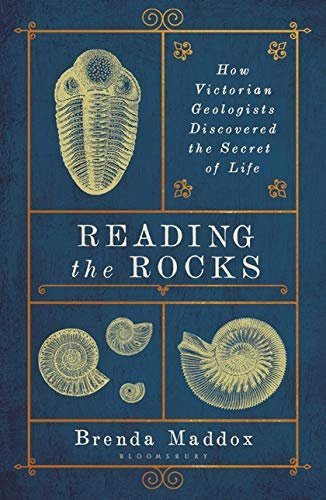
Rather than indulge in a smartass slanging match I would rather discuss the content of my post. You have noted the influence of non scientists on science. This book makes salutory reading about the influence of Byron and Tennyson and Coleridge on the science of Geology. Coleridge was also an accomplished Mathematician, as I ahve noted here before.
-
David Hilbert