studiot
Senior Members
-
Joined
-
Last visited
Everything posted by studiot
-
By radio I assume you mean speech communications ? You have not distinguished between digital systems and analog systems but I am guessing that you mean analog ones. Here are 200 pages of an Engineering Masters thesis on how to do this with microwaves, which sit between what we call 'radio' in the spectrum and infrared. https://open.uct.ac.za/bitstream/handle/11427/8363/thesis_ebe_1987_marsden_m.pdf?sequence=4 Note microwaves are also heat radiation of a sort.
-
Well I think there is a great deal fundamental mathematics stuff missing from the OP block diagram. Perhaps you guys should get together with the author of this thread
-
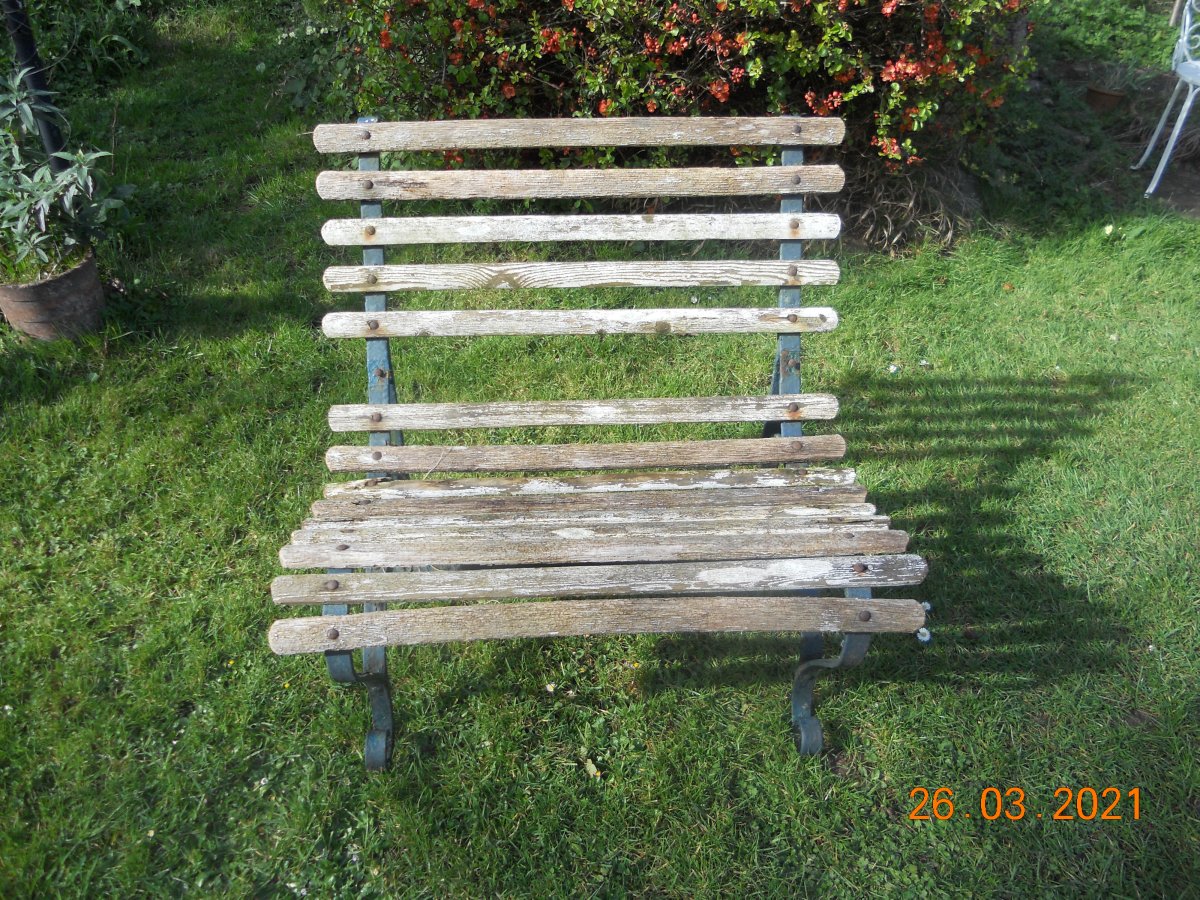
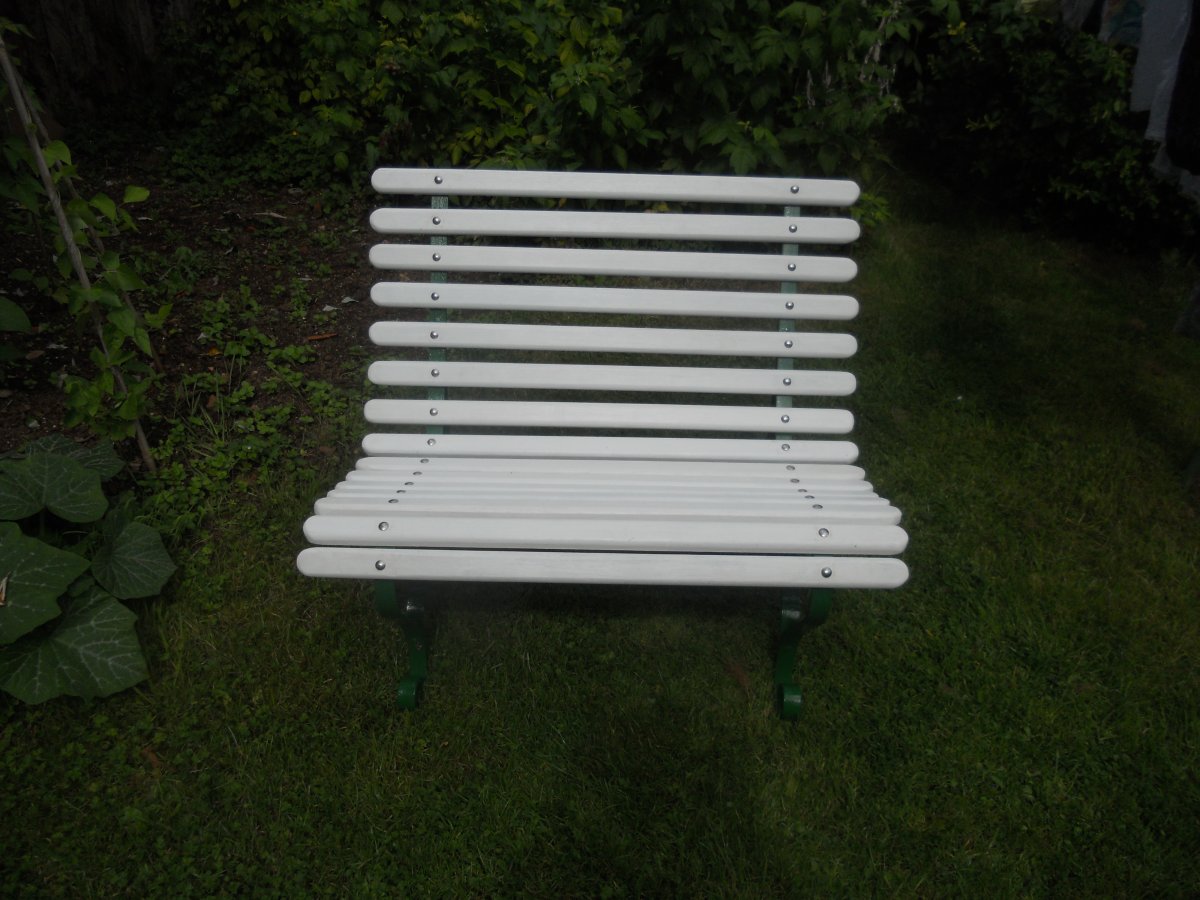
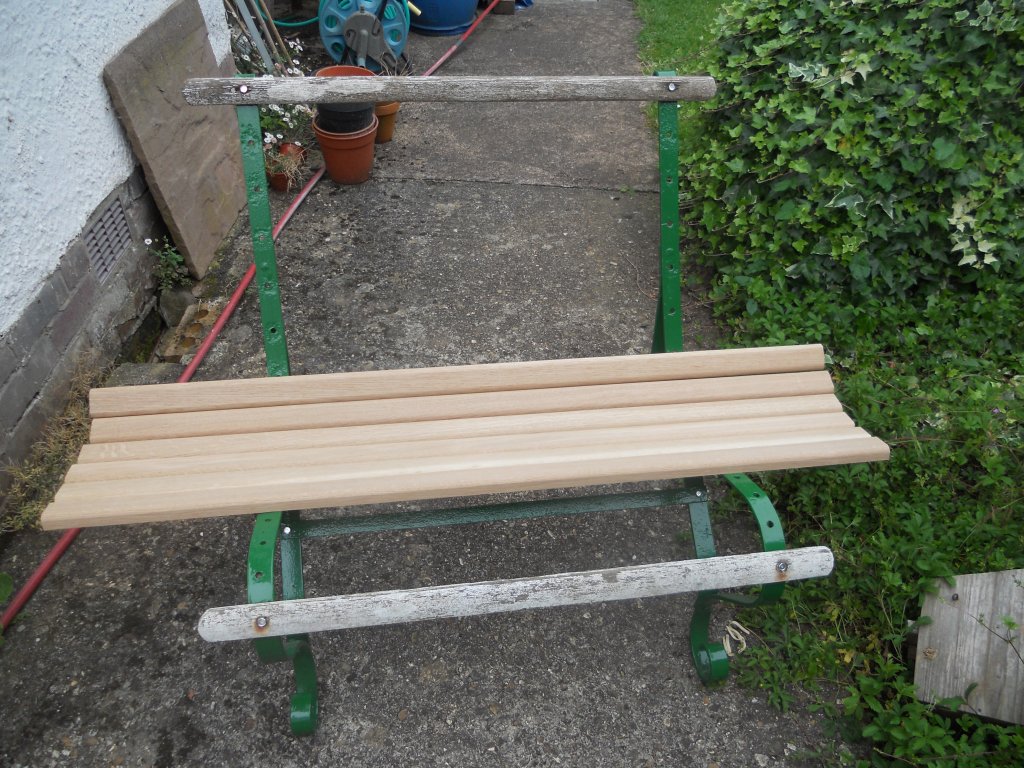
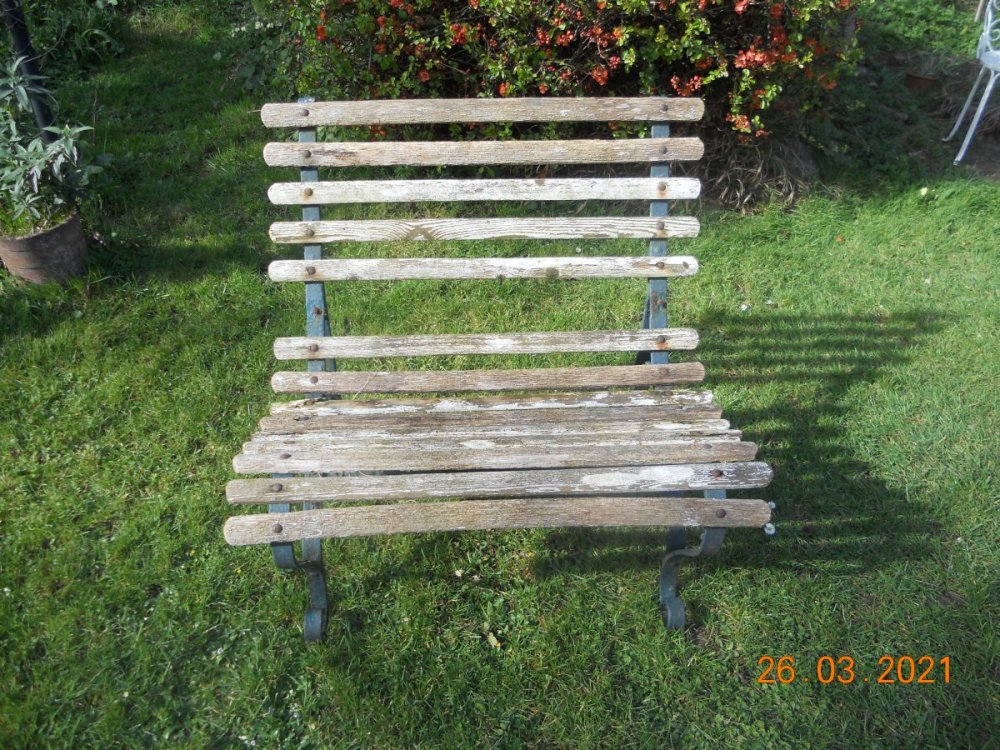
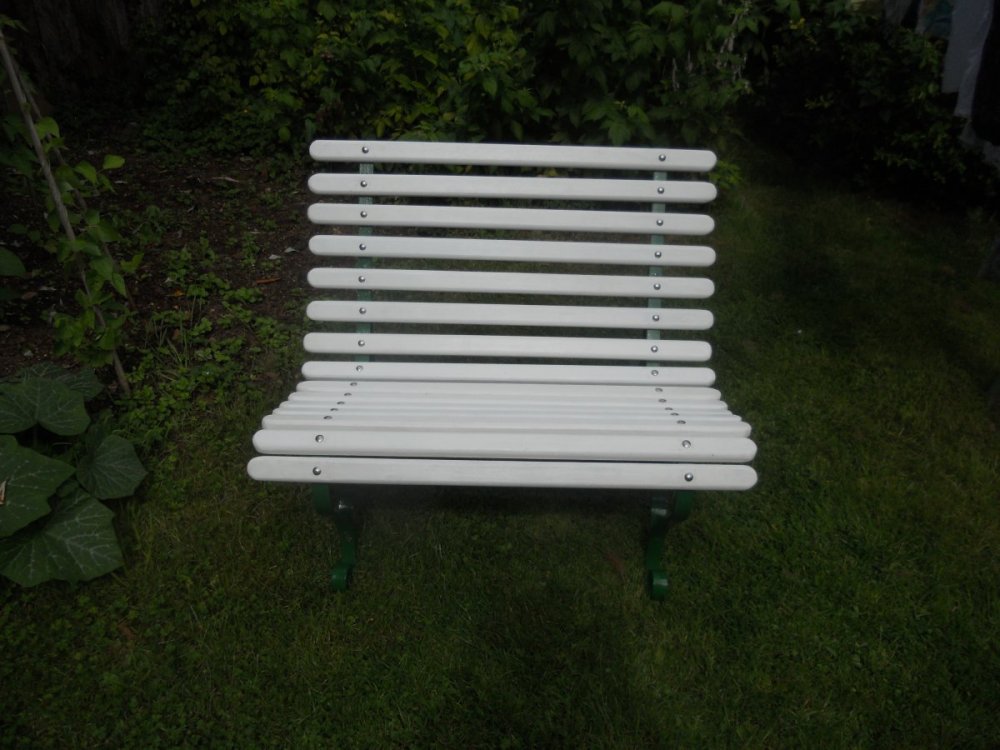
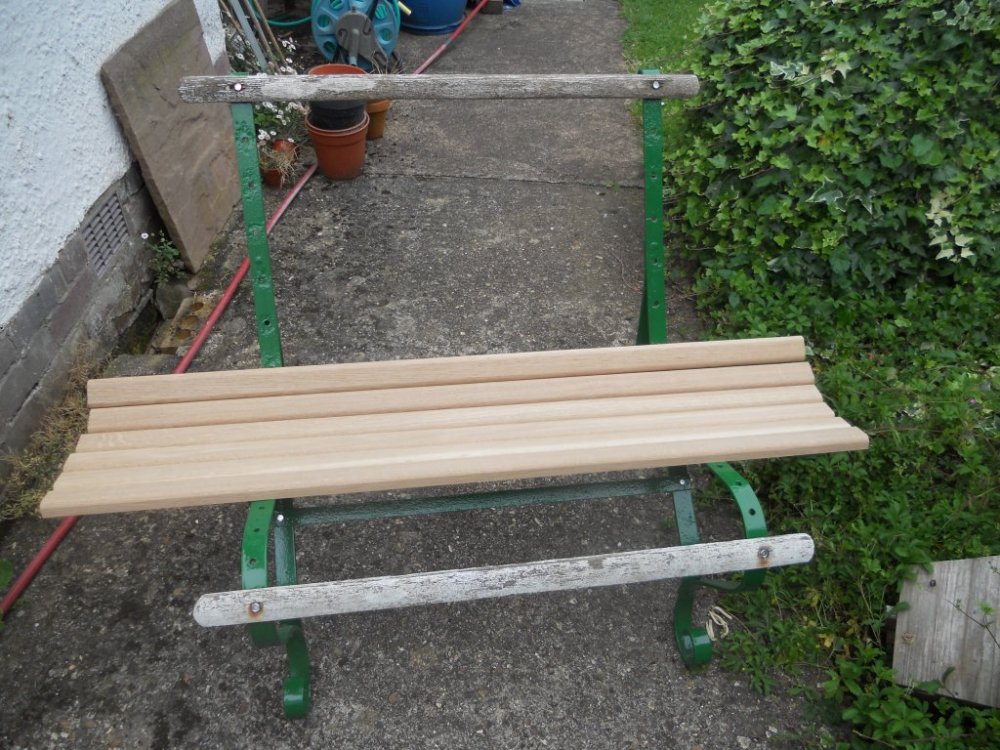
At our age it is getting difficult to find good birthday presents for my wife. This year I remembered here great grandfather's garden bench, which was in a sorry state. I promised to restore it for her birthday. Work in progress showing the grit blasted and repainted metalwork, some partly finished extended new oak slats. The finished article reassembled.
-
Yes the University of Liverpool has produced a great site in 'Chemtube'. And it's free. +1 I second the distinction beteewn Molecular Orbital theory and Atomic Orbital theory. It is generally too difficult to derive molecular orbitals from scratch in the same way as for atomic orbitals as there are more than one nuclei involved, maybe very many. One approach is called the LCAO method or Linear Combination of Atomic Orbitals which involves the fabricattion of atomic orbitals from both (all) participating atoms.
-
If you think about my free body diagrams in your other friction questions and draw similar ones here you can answer both question 5 Are the blocks in equilibrium ? and question 6 which follows it. Since the wall is smooth, both blocks must be falling freely under gravity. Do objects of unequal weight fall at different speeds ?
-
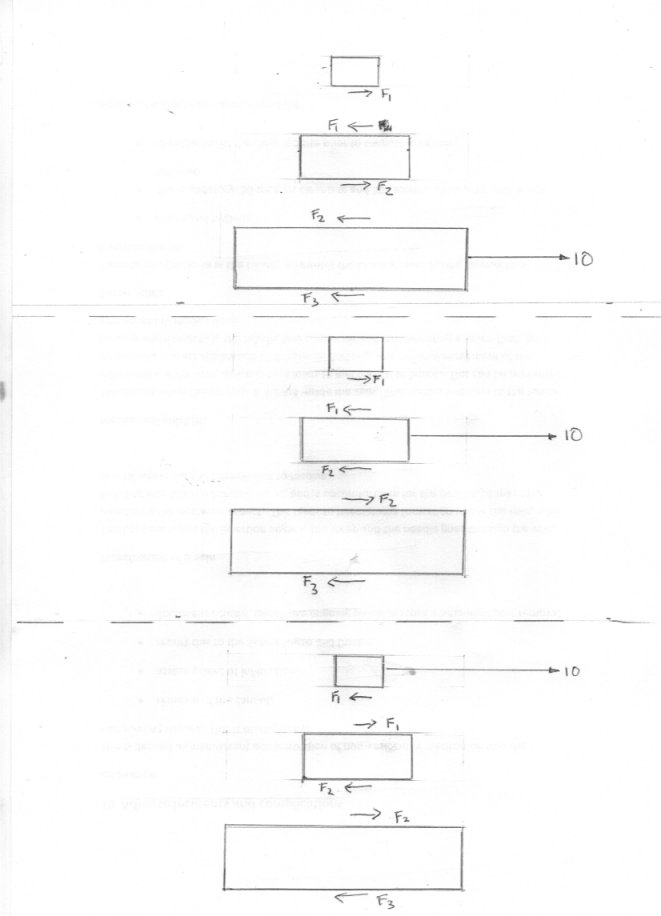
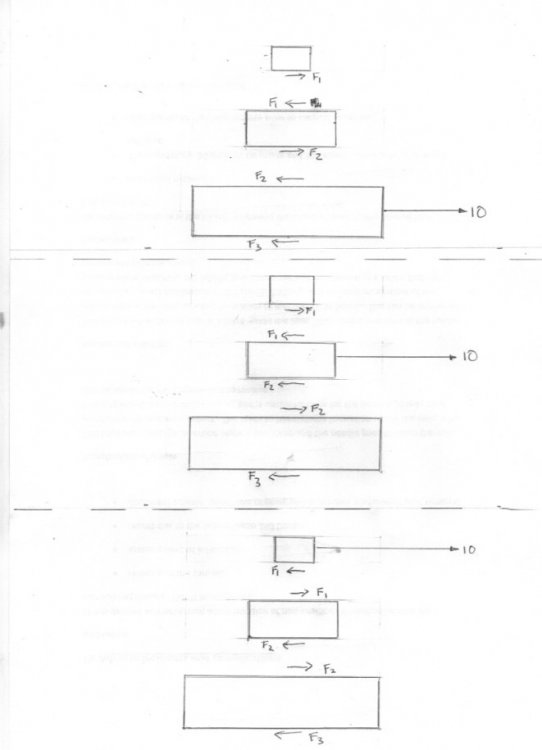
Thank you, I see that you are working along the right lines but trying to take short cuts. Perhaps this is why you have reached the astounding conclusion that the accelerations are different yet the blocks do not move relative to each other. This is pure Physics speaking. How can two objects, both starting from zero velocity not have different subsequent velocities for all time if their accelerations are different ? OK back to the Mathematics. You have correctly matched some frictional forces to some frictional coefficients. What about μ3 and F3 ? The three equations of friction I referred to are F3 = μ3N3 = 0*12g = 0 Newtons , where N is the normal reaction between the bottom (7kg block) and the table. F2 = μ2N2 = ? F1 = μ1N1 = ? I will leave you to complete these and confirm you understand where they come from. Then you will have all the forces acting on each of three blocks. For each of those three blocks you have to consider what happens when the 10N force is applied at three different locations. That is a total of 9 possibilities. Each of these 9 possibilities can be dealt with by considering the net force (not equilibrium) acting on each block as a free body. So for the first one apply the 10N to the 7kg block we have 10N acting to the right as shown in the original diagram and F3 plus F2 acting to the left. (Please confirm that you understand why F3 and F2 are acting to the left) OK so this means that the net force on block 3 is 10 - 0 - F2 in this case (remember there are other cases where the 10N force is applied elsewhere) Now applying Newton's Second Law the acceleration of block 3 = a3 = (10 - F2)/7 Repeat these calculations 8 more times and you will have covered all cases. Here are my free body diagrams
-
I asked what you have done, not what you have not done ! Have you assigned all the frictional forces between the blocks and the table and the blocks ? That will give you a lot of equations and is where you should start. In other words, write down all the equations of friction.
-
Neither. You haven't posted the whole question. "The friction on B due to A in equilibrium" is an incomplete sentence that may or may not contain the actual question. Further the blocks must be sliding down the wall if there is no friction between the wall and the blocks. So how is F maintained ?
-
Yes, get a good night's rest. Perhaps when you wake up you will have some new inspirations that don't mangle the mathematics. Division by zero is mathematically undefined in the systems you are talking about.
-
This question contains enough to be analized. What have you actually done towards it?
-
This question is incomplete.
-
So kindly exhibit the boundaries of the empty set or the set R which I have also offered as a set with no boundaries. Do you actually know what a boundary point is in point set topology and the other types of point that a set may possess ?
-
The only conclusion I can come to is that you are unable to support these nonsensical claims and are unwilling to consider any offers of help in the right direction. So you have reverted to personal attacks. As a result I can only recommend closure of this thread.
-
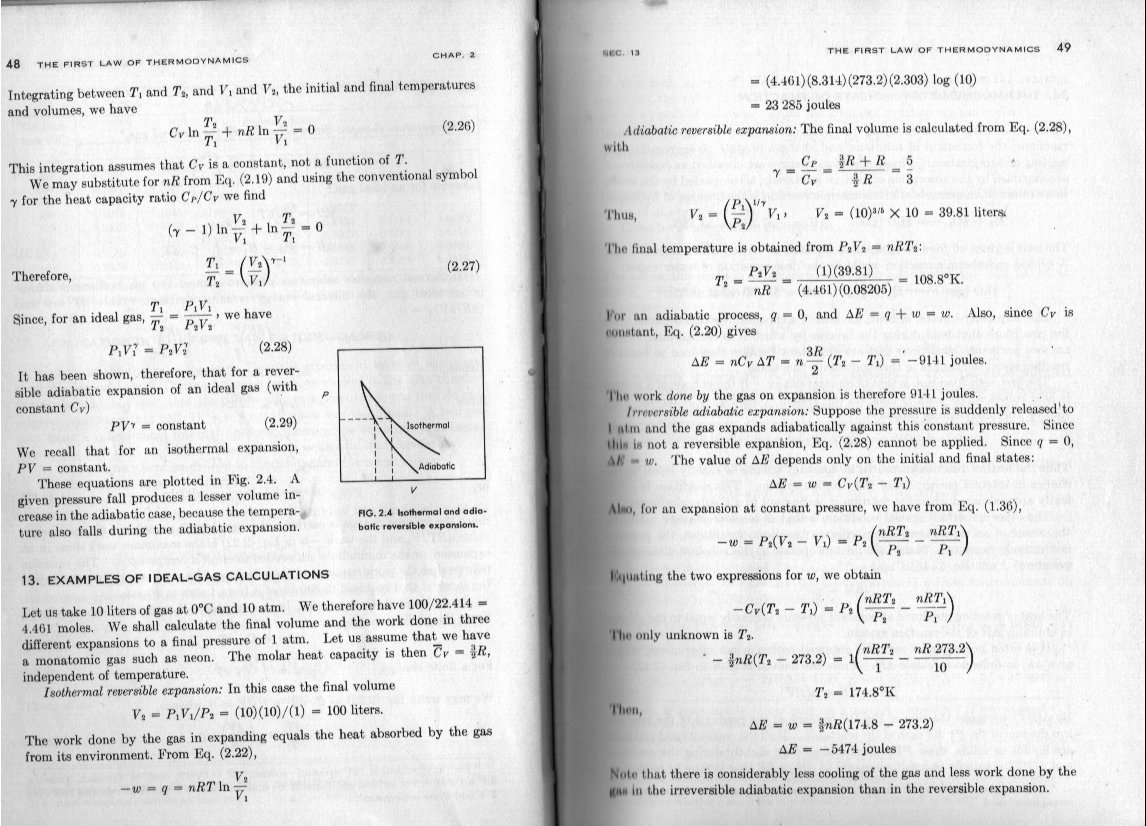
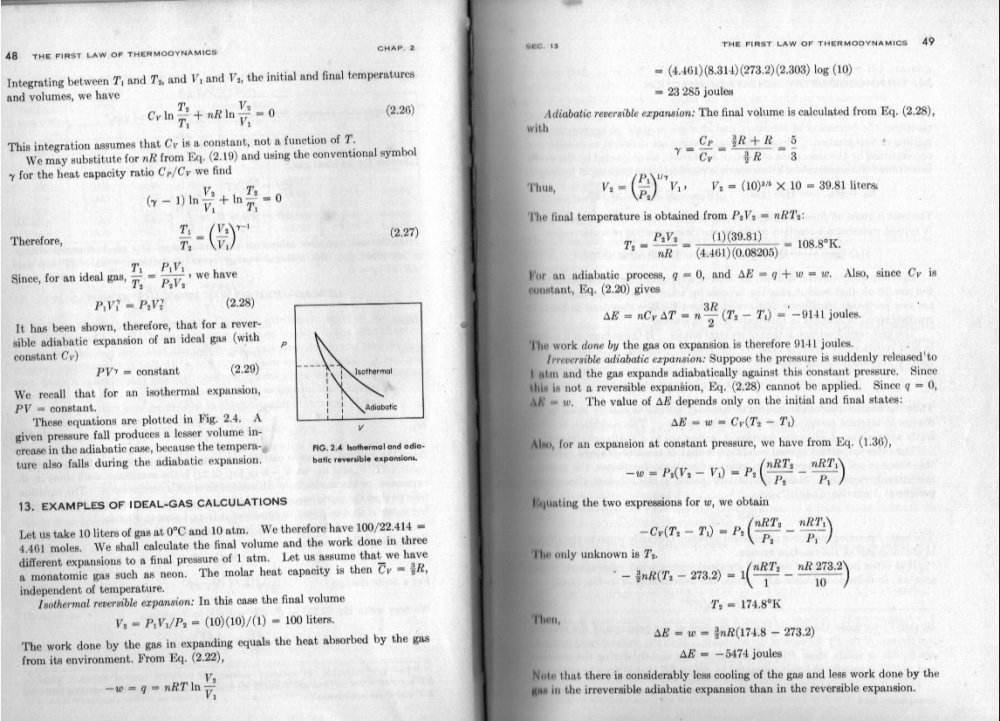
Here are example calculations for the different circumstances of expansion. If you are designing a calculator is this a physics/chemistry or computing project ? We cannot do the question for you but can offer more help about the Thermodynamics if you are studying computing and vice versa. Note the examples assume a monatomic gas, I will leave you to suggest which of these calculations is appropriate for your circumstances and what difference if any using nitrogen makes. We can then discuss this further. Hopefully you realise that we work in degrees Kelvin in Thermodynamics.
-
But if, in an orbital there are two electrons, you know that they have opposite spins, you just don't know which is which until you 'measure'. Freddy seems to think that if one spin is changed (and this can happen), then the other must also change. This is not necessarily the case. One electron only need have its spin changed, but it then has to leave the orbital. This, of course, results in disentanglement.
-
You need much greater maths skills in chemical engineering than biosciences or biotech.
-
But that wasn't the question, which was neither about determination of the particles nor about photons. Yes simultaneity comes into it, but not in the way you suggest.
-
Modern and theoretical physics is just fine. Let us take your example of two entangled electrons. Call them A and B and the spins + and - for identification. Now we do not need to know how they became entangled, just that they are entangled. When you say they 'change spin' you need to be clear that they (the electrons) do not change spin by themselves. Some agent causes a spin change of say electron A which is spin +. Why do do think whatever event cause the spin change preserves entanglement ? Can you offer an example of such a change ? Here is an example of a change that does not. Two electrons in the same orbital are entangled. One electron is promoted to a free orbital with a spin change, leaving the other behind. This change is the basis of what is known in spectroscopy as a triplet state, where the entanglement is broken and the left behind electron does not change spin.
-
And you did not address the self contradiction in the text of your first link, although I explained it in detail.
-
So here's the report on a man who refused vaccination and died of covid. Stephen Harmon How big a catastrophe was that ?
-
Yes you are indeed missing something. The 320 series refers to 320 watts (power) at a fixed voltage and the -24 refers to the voltage so you want a unit that can deliver a fixed 24 volts DC from a vaiety of AC or DC sources at 320/24 = 13.3 amps max. This is a voltage power supply which means the amperage is the maximum that can be supplied. But this amperage is set by the demand from the load and not by the power supply itself. Please confirm these specs are what you need and not your application as ahs already been requested. Note also that physical dimensions may be an issue as electrical connection layour and cooling and fan outlet arrangements need to be considered in relation to the siting in place. I understand some suppliers are listing various of these as discontinued. Here is a pdf (strip off the final .txt to get a pdf) 2915226.pdf.txt Please confirm that these
-
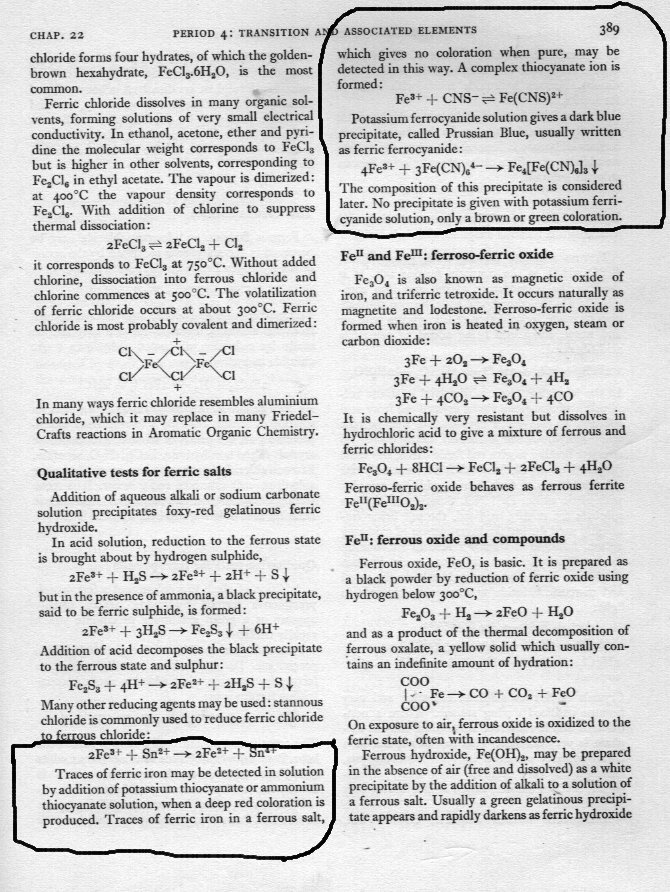
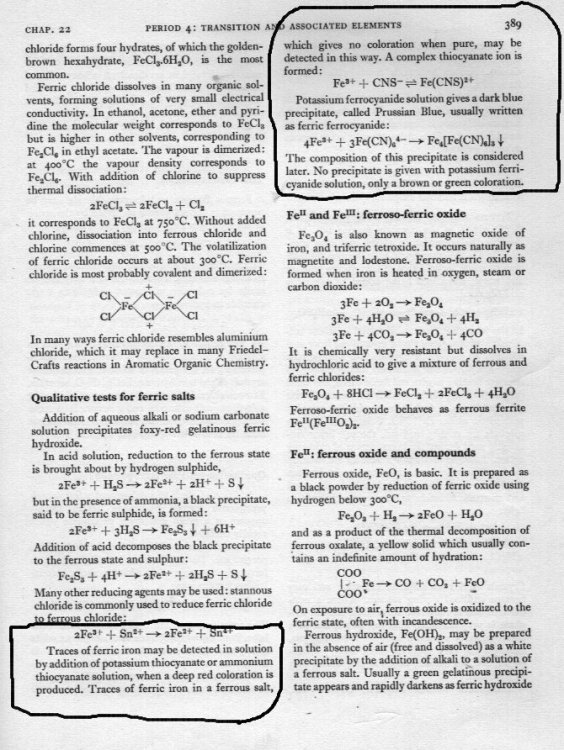
I have atteched some information about ferric thiocyanate that may be useful. Here also is another paper on the kinetics you are asking about. https://web.williams.edu/wp-etc/chemistry/epeacock/EPL_CHEM_361/CHEM361_LAB_DIR/JACS80.2961.58.pdf I cannot be more specific without more information. Also you have not answered my questions. For your information here is the advice given to Pharmacy students at Robert Gordon University. Labs. Make sure you understand what your experiment is about and what you are trying to achieve, before you arrive at the laboratory. Make sure you show your results to the experiment supervisor and discuss them before you leave the lab. In the first year we provide a workbook to record your results and describe the experiments. Experience shows that, particularly in the first year, many students leave with nil or incomplete or otherwise unsatisfactory results. The workbook is designed to help overcome this.
-
Hopefully your wet chemistry is better than your maths. (No offence meant) Those two ions can't be the only reactants. Can you say why not ? The equilibrium constant is defined in terms of all reactants and products. But some reactions are multistep, which means that there will be intermediate reations where the products of one reaction form the reactions of the next. You should always start with the stoichiometric reaction and work from there ? This publication may help you https://pubs.acs.org/doi/10.1021/ja01545a015
-
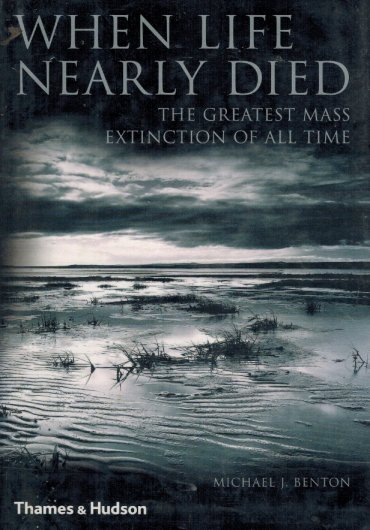
Thank you for the link. +1 I will listen when I have more time. A running time of the presentation would be handy for others though. You may like to look out this book by Professor Benton of Bristol University, who was a key player in some of this work. It is very readable by the lay person, but offers much useful information as well. It also treats all 5 of the recognised major mass extinctions, not only the dinosaurs. Do not confuse the title with when the earth nealy died or the day the eath died, which are different (lesser) books.
-
One more thought I meant to put in my last post. We are now well into the second half of 2021. We know more than we did about Covid, but there have been many suprises Many papers and date stem from 2019/2020 when Covid was almost unknown. So beware of old data.